Sale!

NORMALIZATION OF CORRUPTION THROUGH EDUCATIONAL INSTITUTIONS IN INDIA

Original price was: $5.00.Current price is: $2.00.

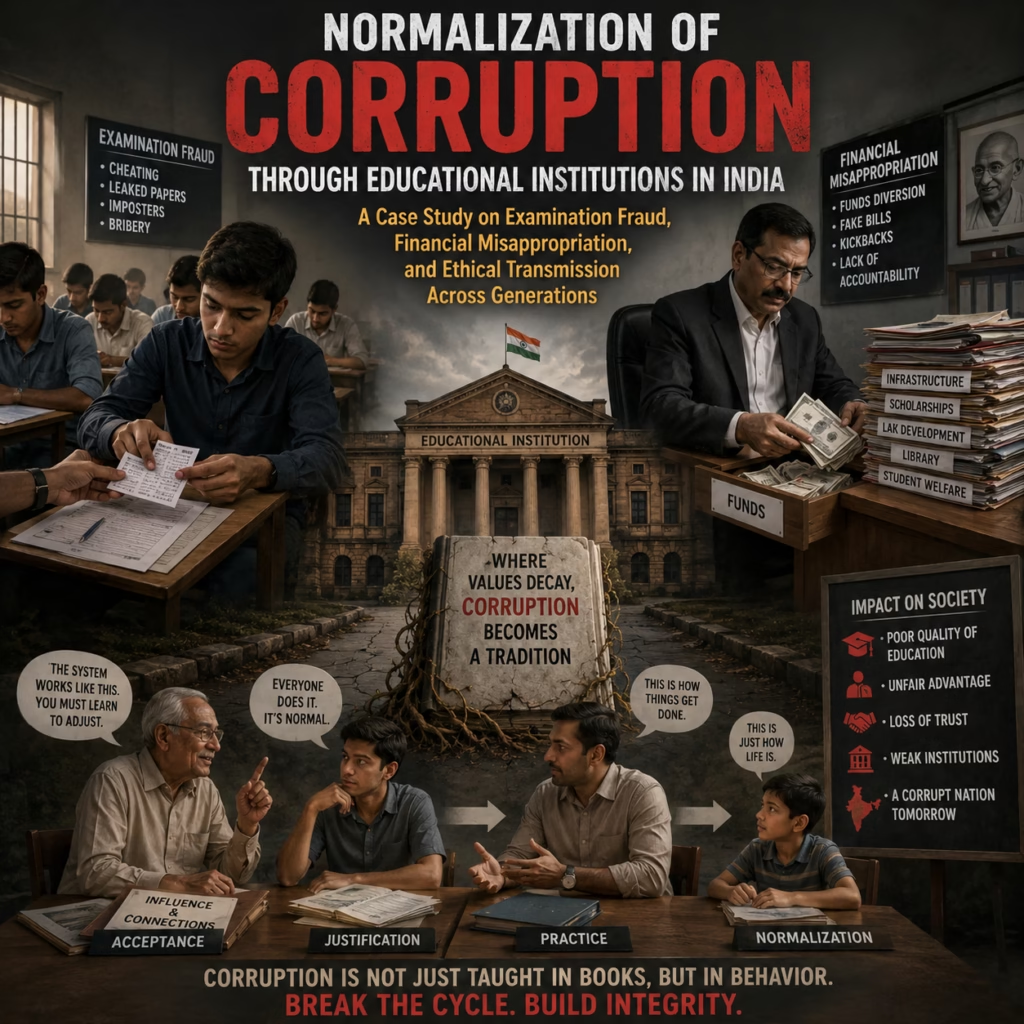
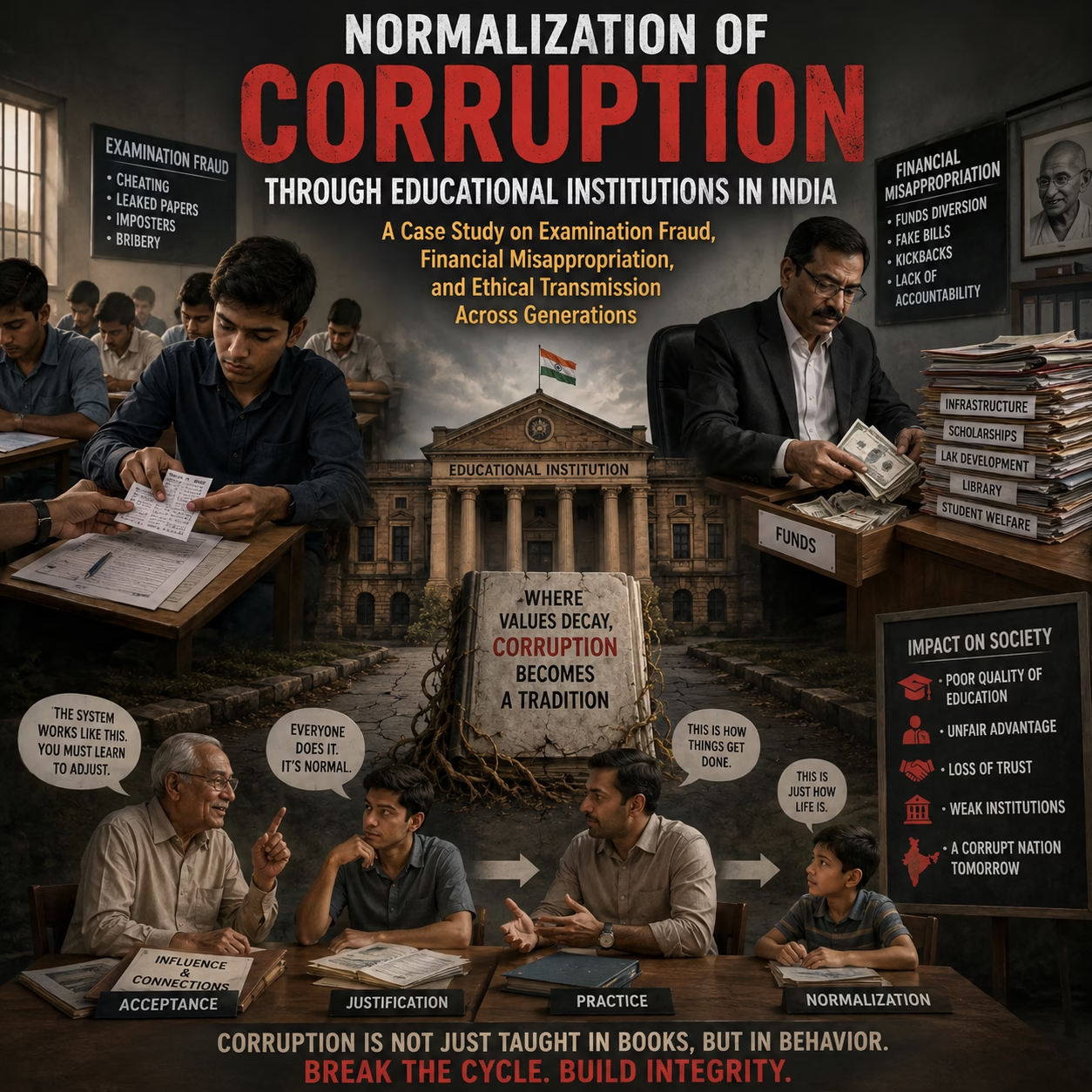
This case study examines how systemic corruption within Indian educational institutions — spanning secondary schools, government colleges, and universities — functions not merely as administrative misconduct, but as a hidden curriculum that normalizes unethical behavior across successive generations of students. Drawing on qualitative field observations, respondent testimonies, media reporting, and secondary institutional data, this paper documents three interconnected corruption domains: organized examination fraud facilitated by educators, financial misappropriation through fake procurement and inflated billing, and misuse of publicly allocated development and research funds. The central argument is that when students repeatedly observe institutional dishonesty being practiced, rewarded, or ignored, corruption evolves from a punishable offense into a culturally internalized survival strategy. This paper proposes a Corruption Learning Cycle framework and concludes with structural reform recommendations targeting examination systems, financial governance, and ethics education.


SKU: normalization-of-corruption-through-educational-institutions-in-india-a-case-study-on-examination-fraud-financial-misappropriation-and-ethical-transmission-across-generations Category: Brand:

Description

This case study examines how systemic corruption within Indian educational institutions — spanning secondary schools, government colleges, and universities — functions not merely as administrative misconduct, but as a hidden curriculum that normalizes unethical behavior across successive generations of students. Drawing on qualitative field observations, respondent testimonies, media reporting, and secondary institutional data, this paper documents three interconnected corruption domains: organized examination fraud facilitated by educators, financial misappropriation through fake procurement and inflated billing, and misuse of publicly allocated development and research funds. The central argument is that when students repeatedly observe institutional dishonesty being practiced, rewarded, or ignored, corruption evolves from a punishable offense into a culturally internalized survival strategy. This paper proposes a Corruption Learning Cycle framework and concludes with structural reform recommendations targeting examination systems, financial governance, and ethics education.

Reviews

There are no reviews yet.

Only logged in customers who have purchased this product may leave a review.

You may also like…