
Looking for a Trusted Digital Marketing Consultant and Auditor?
With over 8 years of experience in the digital marketing industry, I offer expert consultancy and auditing services to help businesses thrive in the competitive online landscape. My focus is on crafting customized marketing strategies and developing Customer Acquisition Cost (CAC) models that drive exponential growth.




I am working in a digital marketing industry from past 7 years. I had a good network with worked with many businesses and companies of all types whether they are retail as well as it company. I had worked with top MNC’s. With successful projects not only in marketing but also in IT. I can help business with end to end solutions, whether it’s a IT setup or a complete business setup with sales, revenue, marketing and customer acquisition strategies. Existing business are helped through marketing audit and consultancy so that they can generate more revenue and growth.
More then 5000+ Digital Marketing Success Cases
More then 5000+ Digital Marketing Sevice Clients
More then 5000+ Digital Marketing Consultancy
More then 5000+ Digital Marketing Consultancy Success Cases
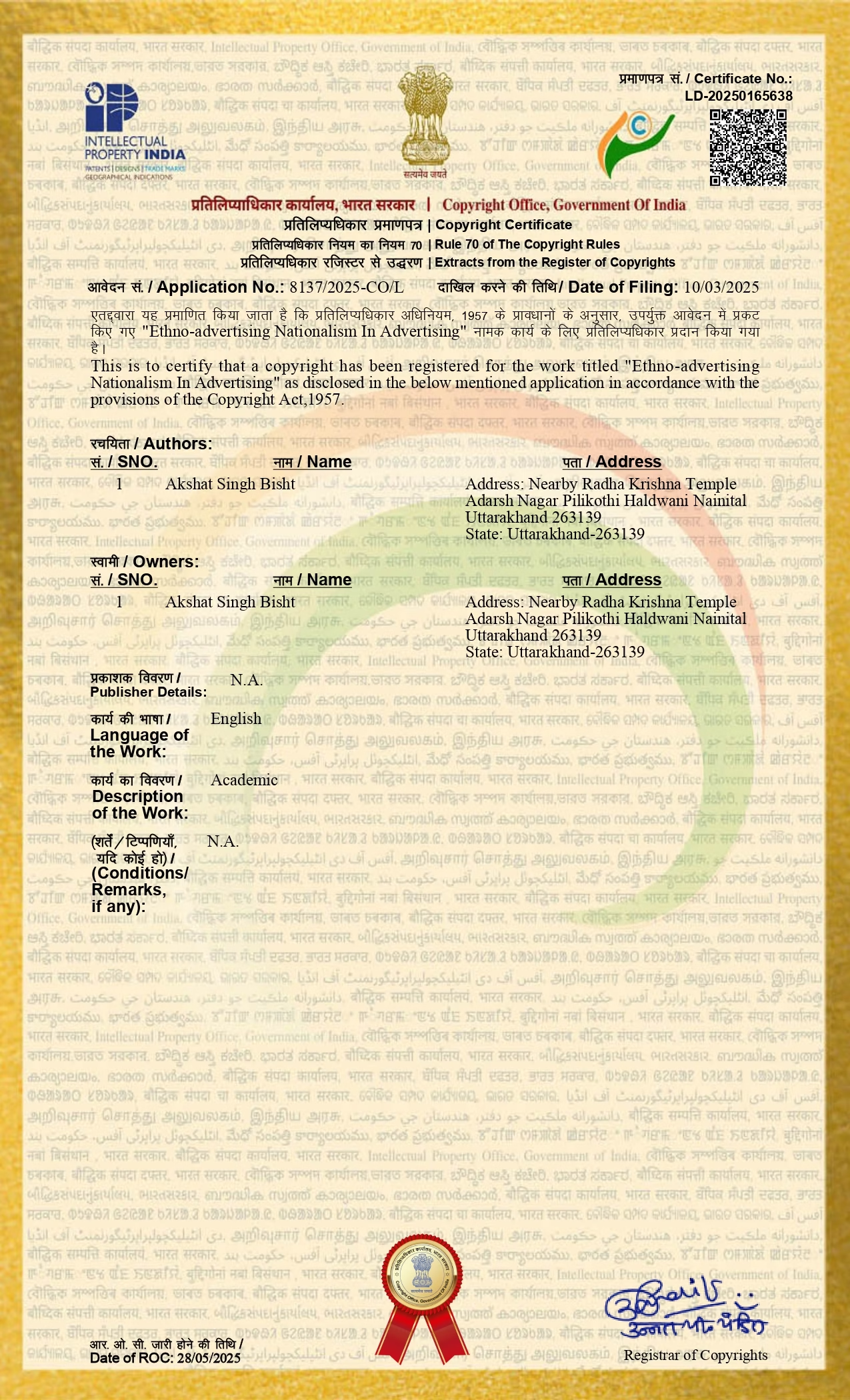
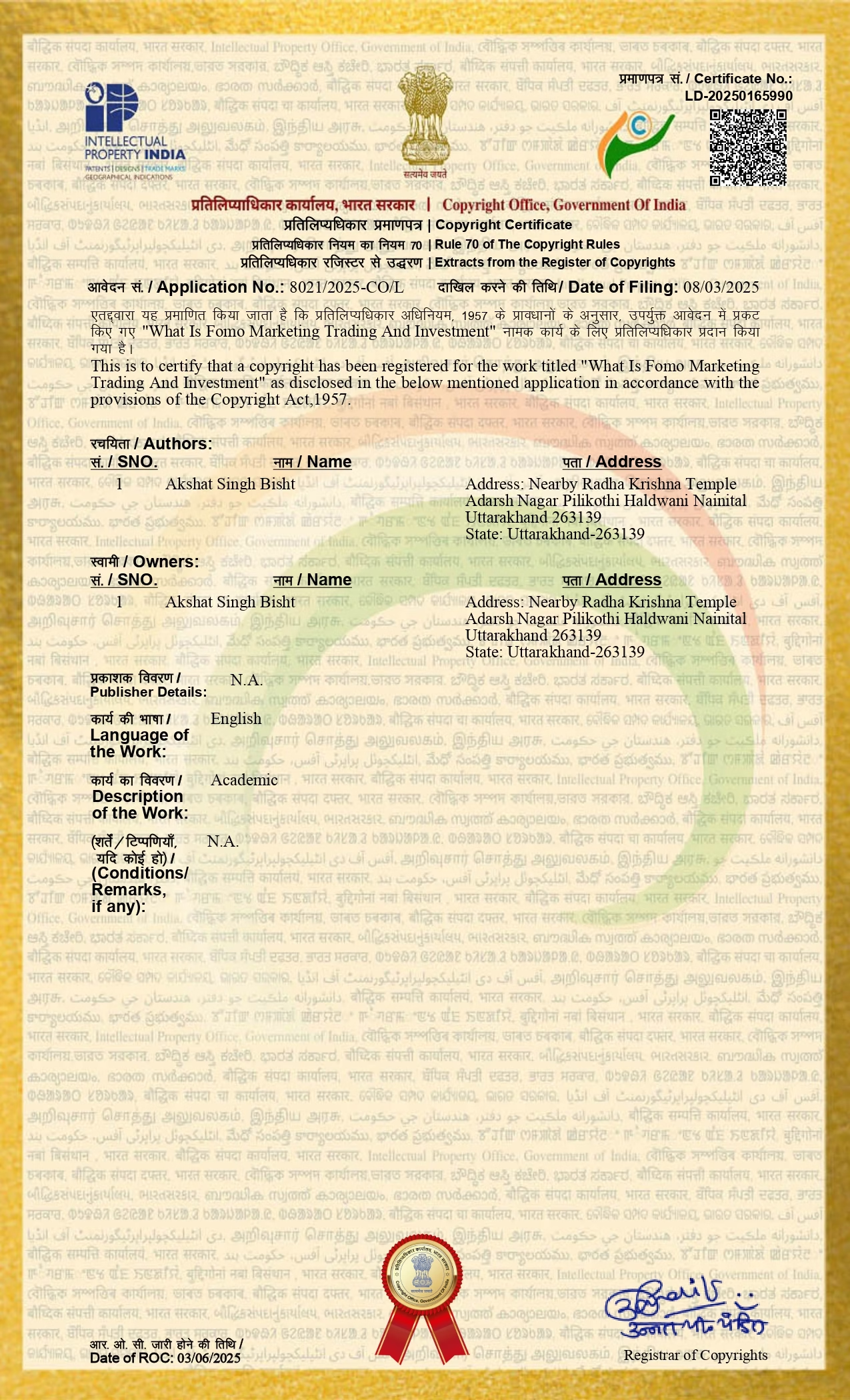
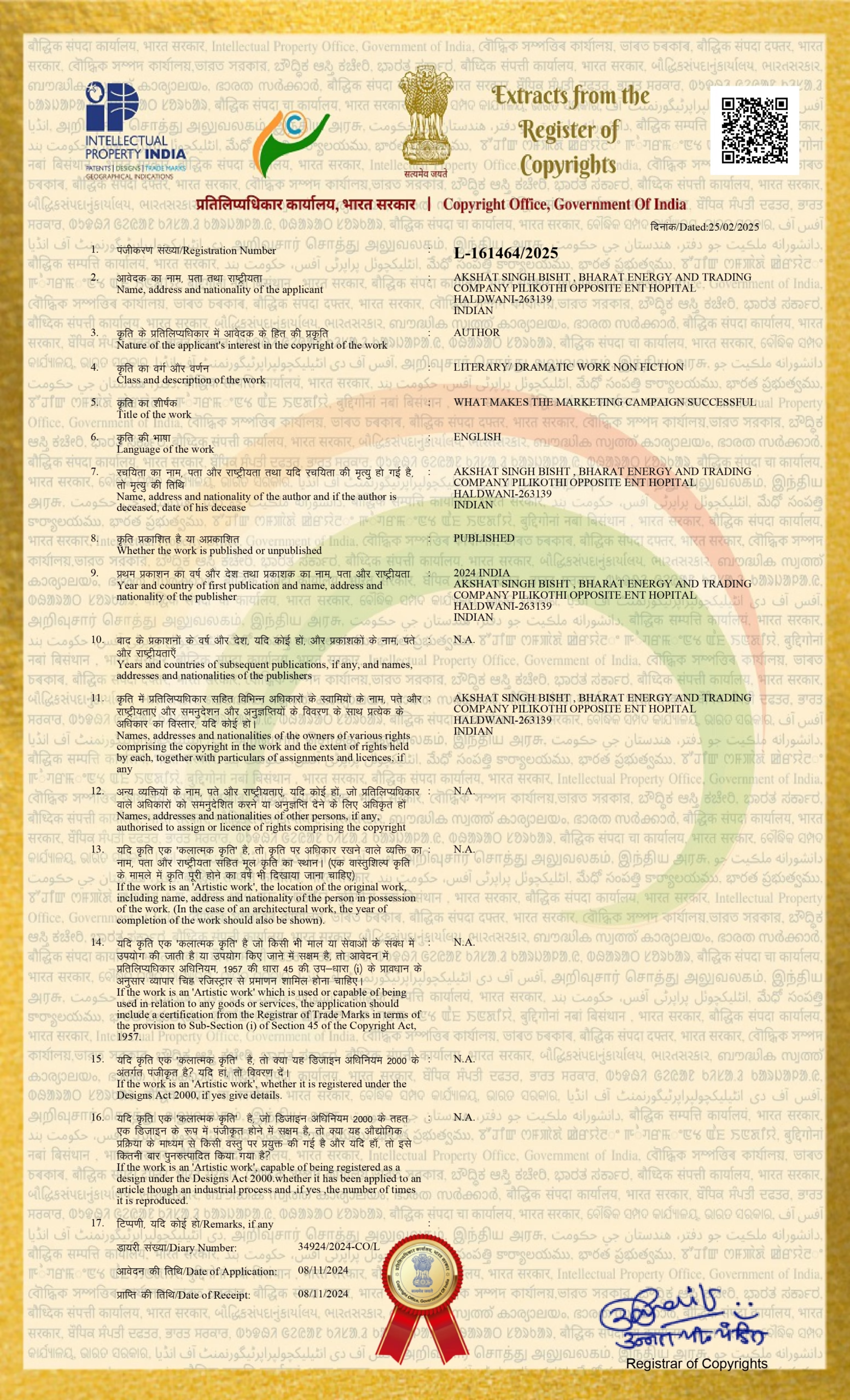
Intelluctual Copyright and Awards


















Close meetings to discuss project and gather information about it.

At this stage we estimate the project then move with paperwork.

Successful delivery of project after testing.





Akshat Singh Bisht is an accomplished author, business strategist, and results-driven digital marketing consultant with more than 8 years of hands-on experience helping brands scale across India and international markets. Known for combining strategic thinking with performance execution, he has built a reputation for delivering measurable growth through modern marketing systems, branding intelligence, and customer acquisition strategies.
Through his consulting work, Akshat has supported businesses in strengthening their market presence, improving profitability, and building sustainable long-term growth models. His expertise spans multiple industries, with a strong focus on data-backed decision-making, customer psychology, campaign optimization, and innovation-led business expansion.
Known for combining strategic insight with execution excellence, Akshat has worked across multiple sectors and markets, helping brands improve customer acquisition, optimize campaigns, and build sustainable digital growth models.
He is also a recognized independent author with multiple books officially published and available on Amazon.in, strengthening his authority as a thought leader in marketing, branding, management, and business strategy.
Strategic Digital Marketing Consultation
Tailored growth strategies aligned with business objectives, covering brand positioning, lead generation, funnel design, performance marketing, and digital expansion.
Advanced Marketing Audits
Comprehensive audits of existing campaigns, websites, customer journeys, acquisition channels, and media spend to uncover opportunities and improve ROI.
Customer Acquisition & CAC Optimization Models
Development of scalable customer acquisition frameworks and CAC models designed to maximize returns while reducing wasteful spend.
Growth & Brand Advisory
Support for founders, startups, SMEs, and enterprises looking to build stronger brands, enter new markets, or transform their marketing operations.
Performance Marketing Leadership
Execution-focused strategies across SEO, Meta Ads, Google Ads, content systems, and conversion optimization.
Akshat Singh Bisht has authored a growing portfolio of books that explore modern marketing, branding, consumer psychology, campaign management, leadership systems, and sustainable business growth. His work is built around one core belief: successful businesses are rarely created by luck alone—they are built through strategy, discipline, customer understanding, strong execution, and the ability to adapt to changing markets. Through his books, he seeks to simplify complex business and marketing concepts into practical knowledge that readers can immediately apply in real-world environments.
His publications are designed for a wide range of readers, including professionals, entrepreneurs, startup founders, students, campaign managers, agency leaders, middle-management executives, and business decision-makers who want actionable insights rather than abstract theory. Whether someone is starting a business, managing a marketing team, scaling a company, or trying to understand how customers think, his books provide frameworks, observations, and practical guidance grounded in business realities.
A distinguishing feature of Akshat’s writing is the balance between strategy and execution. Many business books focus only on high-level ideas, while others discuss tactics without explaining the bigger picture. His portfolio bridges both worlds. Readers gain insight into why certain strategies work, how markets respond, what drives customer decisions, and how teams can implement systems that generate measurable results. This combination makes his books useful not only for learning but also for direct professional application.
One of the central themes across his body of work is modern marketing. Today’s marketing environment is highly competitive, fast-moving, and heavily influenced by technology. Businesses can no longer depend solely on traditional advertising or outdated assumptions. They must understand digital platforms, consumer intent, brand trust, conversion journeys, content ecosystems, and performance metrics. Akshat’s books help readers understand these shifts and adapt to them intelligently. Rather than chasing trends blindly, readers are encouraged to build strong foundations that can perform across changing platforms and market conditions.
Branding is another major pillar in his published works. In crowded markets, products and services often compete on more than price or features. Trust, perception, identity, emotional connection, and consistency can determine whether a customer chooses one brand over another. His writing explores how brands are built over time, how they create authority, how they maintain relevance, and how businesses can communicate value in ways that resonate with their audience. These lessons are especially valuable for startups and growing businesses trying to stand out against larger competitors.
Consumer psychology also plays a key role in his books. Marketing is not only about ads, websites, or budgets—it is ultimately about human decisions. Why do people buy? Why do they delay decisions? Why does urgency work? Why do people trust some brands and ignore others? Why does social proof influence behavior? By exploring psychological triggers such as fear of missing out, trust signals, identity, emotion, and perceived value, Akshat helps readers understand the human side of commerce. This gives business leaders a stronger ability to create ethical, effective campaigns rooted in genuine customer understanding.
Another important area covered in his portfolio is campaign management and execution systems. Many organizations have ideas but struggle with coordination, accountability, timelines, reporting, and consistent results. Campaigns fail not because the concept was poor, but because execution was fragmented. His books examine how campaigns should be planned, structured, monitored, optimized, and reviewed. Topics such as goal-setting, stakeholder management, media planning, budget efficiency, team alignment, workflow discipline, and data-driven decision-making are addressed in ways that are practical for modern businesses and agencies.
For professionals working inside agencies or corporate environments, his books also provide value in leadership and management development. Middle managers, team leads, campaign heads, and department coordinators often face pressure from both sides—senior leadership expects results, while operational teams need direction and support. Akshat’s writing recognizes this challenge and provides guidance on communication, ownership, performance culture, delegation, process design, and decision-making. These are highly relevant skills in today’s results-driven workplace.
Students and early-career professionals also benefit from his publications because they help bridge the gap between academic learning and industry expectations. Many learners understand textbook concepts but lack exposure to how business decisions are actually made in the real world. His books provide practical context, examples, and systems thinking that can prepare readers for careers in marketing, advertising, business operations, and entrepreneurship. They are particularly useful for readers who want to think beyond theory and develop commercially valuable skills.
Entrepreneurs and startup founders are another major audience for his work. Starting and growing a business often requires handling multiple disciplines at once: marketing, branding, sales, operations, hiring, budgeting, customer acquisition, and market positioning. Akshat’s books help founders think strategically while remaining grounded in execution. They encourage smarter resource allocation, sharper customer focus, stronger brand communication, and growth systems that are sustainable rather than wasteful.
A recurring strength in his portfolio is relevance to the digital economy. Markets today are shaped by online discovery, social media influence, search behavior, e-commerce journeys, automation tools, and data-driven optimization. His books acknowledge this environment and help readers navigate it intelligently. Instead of presenting old formulas that no longer work, they address modern realities such as platform competition, attention scarcity, audience fragmentation, and the need for continuous optimization.
Another reason readers value his books is their practical tone. The content is intended to be usable. Readers can extract frameworks, apply lessons, rethink current strategies, improve campaigns, strengthen branding, and make better management decisions. This practicality makes the books appealing to busy professionals who need results-oriented thinking rather than unnecessary complexity.
Across his growing portfolio, Akshat Singh Bisht demonstrates a commitment to helping people and organizations succeed through smarter decisions, stronger systems, and deeper market understanding. His books collectively represent more than isolated topics—they form a connected body of knowledge around how modern growth truly happens. From psychology to branding, from campaigns to management, from startup thinking to enterprise execution, his work offers readers tools to compete effectively in a demanding business world.
As markets continue to evolve, the relevance of such knowledge only increases. Businesses need leaders who understand both people and performance, both creativity and numbers, both strategy and operations. Through his publications, Akshat contributes to that need by offering accessible, experience-driven insights for readers who want to grow professionally, build stronger businesses, and create meaningful long-term success.
What Makes The Marketing Campaign Successful is a comprehensive and practical guide that explores one of the most important questions in modern business: why do some marketing campaigns create extraordinary results while others fail despite significant budgets, creative effort, and market opportunity? In a world where brands compete constantly for attention, trust, and customer action, understanding the foundations of campaign success has become essential for businesses of every size. This book is designed to answer that need by providing readers with a structured understanding of what truly drives campaign performance.
The book moves beyond surface-level advice and examines marketing campaigns as systems made up of strategy, psychology, planning, creativity, timing, execution, measurement, and continuous improvement. It explains that successful campaigns are rarely accidents. They are usually the result of disciplined thinking, sharp audience understanding, coordinated execution, and the ability to adapt quickly when data reveals opportunities or problems.
One of the key strengths of the book is its practical approach. Rather than relying only on theory, it translates complex marketing principles into actionable frameworks that professionals, business owners, students, founders, campaign managers, and agency teams can apply in real working environments. It is especially useful for those who want to improve campaign results, reduce wasteful spending, and build repeatable success models.
The book begins by redefining what campaign success actually means. Many businesses incorrectly judge campaigns only through vanity metrics such as likes, impressions, or reach. While visibility can matter, true success is measured through meaningful business outcomes. Depending on the objective, these may include leads generated, sales volume, customer acquisition cost, return on ad spend, brand recall, market share growth, repeat purchase rate, or long-term customer value.
By clarifying this early, the book helps readers shift from activity-based marketing to outcome-based marketing. A campaign that looks exciting but produces no business value cannot be considered successful. Conversely, a campaign with modest visibility but strong profitability may be highly effective.
A major theme of the book is that campaigns fail when objectives are vague. Without clear goals, teams produce disconnected creative work, misallocate budgets, and struggle to evaluate performance. The book explains how every successful campaign begins with defined objectives such as:
Readers learn how objectives determine messaging, channel selection, audience targeting, timeline, and measurement systems. This section is especially valuable for managers who often inherit campaigns with unclear purpose.
One of the most important lessons in the book is that campaigns win when they speak to the right people in the right language. Many campaigns fail because brands focus too much on themselves and too little on customer needs, fears, desires, frustrations, and motivations.
The book explores how to understand audiences through:
Instead of broad targeting, readers are encouraged to create meaningful audience segments and tailored messaging. This makes campaigns more relevant, persuasive, and cost-efficient.
The book explains that even excellent creative work can fail if the offer is poorly positioned. Why should customers choose this product now? What makes it different? Why should they trust the brand?
Readers are guided through positioning frameworks that help brands define:
This section is particularly useful for startups and challenger brands competing against larger players.
A successful campaign often depends on messaging quality. The book examines how words shape perception, trust, urgency, and action. It explains how weak messaging creates confusion, while clear messaging creates movement.
Topics include:
Readers learn that messaging should focus less on features and more on what the customer gains.
The book strongly emphasizes that creativity should serve strategy. Many campaigns look visually impressive but fail commercially because creative work is disconnected from business goals.
It explains how great campaign creativity should:
This section is especially relevant for agencies and internal marketing teams balancing creative ambition with commercial accountability.
No single channel guarantees success. The book explains that platforms must be selected based on audience behavior and campaign objective rather than hype or habit.
It compares the strategic role of channels such as:
Readers learn how top-performing campaigns often combine multiple channels in coordinated customer journeys.
A highly valuable section focuses on how campaigns waste money. Many brands overspend on poor targeting, weak creatives, wrong channels, bad landing pages, or campaigns left unmanaged.
The book teaches smarter budget thinking:
This helps readers protect budgets while improving outcomes.
The book highlights a common problem: brands optimize ads but ignore where traffic lands. Strong campaigns often fail after the click.
Readers learn the importance of:
This section reinforces that campaigns are end-to-end systems, not just ad placements.
One of the strongest insights in the book is that successful campaigns are rarely perfect at launch. Winning campaigns are often built through testing and refinement.
It covers:
Instead of emotional decision-making, readers are taught to optimize using evidence.
The book guides readers away from vanity metrics toward performance intelligence. Depending on campaign type, meaningful metrics may include:
This helps leaders make better decisions and communicate results clearly to stakeholders.
A standout section analyzes real reasons campaigns underperform. Common causes include:
This diagnostic framework is extremely useful for audits and campaign rescue situations.
Campaign success is not only strategy—it is operations. The book explains how delays, unclear ownership, poor approvals, and weak communication damage even strong ideas.
It emphasizes:
This makes the book valuable for managers and agencies.
The book offers a balanced view between immediate conversions and long-term brand equity. Many businesses over-focus on instant returns while neglecting memory, trust, and market presence.
Readers learn why successful organizations often run both:
This dual perspective is highly strategic.
The book serves multiple audiences:
Business Owners: understand where money is wasted and how growth is created.
Marketers: sharpen campaign planning and optimization skills.
Students: gain real-world knowledge beyond textbooks.
Agencies: improve client results and retention.
Managers: build stronger systems and reporting discipline.
Founders: scale with smarter acquisition strategies.
What makes What Makes The Marketing Campaign Successful especially useful is that it is actionable. Readers can apply lessons immediately by improving campaigns, refining messaging, fixing funnels, reallocating budgets, and building better dashboards.
It is not just about advertising—it is about commercial thinking.
The central philosophy of the book is simple: successful campaigns happen when strategy, audience understanding, creativity, execution, and optimization work together. If one area is broken, the whole system suffers. If aligned correctly, campaigns become scalable growth engines.
If you’d like to buy What Makes The Marketing Campaign Successful, it is available online in both Kindle eBook and Paperback formats.
You can purchase it directly here:
The Amazon listing shows the book available in paperback and Kindle formats, with the Kindle edition also accessible through Kindle apps on mobile, tablet, PC, or web.
It is also listed through the publisher:
What Makes The Marketing Campaign Successful matters because marketing today is crowded, expensive, and highly competitive. Many businesses spend on campaigns without fully understanding why some succeed while others fail. This book helps bridge that gap by studying successful campaigns and extracting practical lessons readers can apply immediately.
The book examines seven major successful campaigns from global brands, including examples such as Nike, Snickers, Dove, and Old Spice, analyzing their origins, execution, and impact.
The book goes beyond ads and explores why customers emotionally responded to these campaigns—helping readers understand trust, humor, identity, urgency, and persuasion.
Whether you are:
…the lessons can help improve campaign thinking and decision-making.
One failed campaign can waste large budgets. Learning what historically works can reduce costly mistakes and improve ROI.
The book can help readers improve:
What is FOMO is an insightful and timely book that explores one of the most powerful emotional forces shaping modern consumer behavior: Fear of Missing Out, commonly known as FOMO. In an era dominated by social media, instant updates, limited-time offers, viral trends, and constant comparison, FOMO has become a major driver of how people think, feel, and make decisions. This book examines how that psychological phenomenon influences markets, relationships, technology use, branding, and everyday choices.
The concept of FOMO goes far beyond simply wanting to join a trend. It reflects a deeper emotional response—the fear that others are gaining experiences, opportunities, status, profits, or advantages while one is being left behind. In today’s connected world, people are continuously exposed to what others are buying, achieving, attending, investing in, or talking about. As a result, urgency and comparison increasingly shape decisions. This book helps readers understand why this happens and how it affects both individuals and businesses.
What is FOMO explains the psychology behind FOMO in clear and practical terms. It explores how scarcity, exclusivity, social proof, status signaling, urgency, and peer influence combine to create emotional pressure. Readers learn why people often make faster decisions when they believe an opportunity may disappear or when others appear to be benefiting first.
The book covers topics such as:
For marketers, founders, advertisers, and brand leaders, understanding FOMO is highly valuable. Many successful campaigns use some form of urgency or exclusivity:
However, the book explains that FOMO should be used responsibly. Manipulative tactics may create short-term sales but damage long-term trust. Sustainable brands use urgency ethically by aligning offers with genuine value.
This book is relevant for multiple audiences:
Marketers: Learn how consumer psychology impacts conversion rates and campaign performance.
Entrepreneurs: Understand how to launch products with excitement and momentum.
Students: Gain modern behavioral insight beyond textbook theory.
Consumers: Recognize emotional triggers and make better decisions.
Content Creators: Learn why trends spread and audiences react quickly.
A major theme of the book is the role of digital platforms. Social media constantly displays curated success stories, purchases, vacations, achievements, and exclusive experiences. This creates pressure to participate, keep up, and avoid being left out. The book explains how platforms amplify urgency and comparison, shaping both culture and commerce.
Unlike simplistic guides that only teach persuasion, What is FOMO also encourages ethical reflection. Readers are challenged to ask:
This makes the book more balanced and credible.
FOMO influences purchasing, investing, career moves, relationships, event attendance, and online behavior. Understanding it is no longer optional—it is essential for navigating the modern attention economy. Businesses that understand FOMO can communicate better. Individuals who understand FOMO can make wiser choices.
You can purchase What is FOMO online through Amazon in available formats such as Paperback and Kindle eBook.
The book is listed under author Akshat Singh Bisht on Amazon India.
Paperback Edition
Best for readers who prefer a physical copy for study, highlighting, note-taking, and reference.
Kindle eBook Edition
Ideal for instant reading on:
What is FOMO is valuable for readers who want to understand how urgency, scarcity, social proof, trends, and emotional triggers influence decisions in:
It also discusses ethical use of FOMO strategies and practical modern business applications.
Ethno Advertising : Nationalism in Advertising is a deep and thought-provoking exploration of one of the most powerful yet often underestimated forces in modern marketing: the relationship between identity and commerce. While many traditional business discussions focus on price, quality, convenience, distribution, or technology, this book examines another dimension that strongly influences consumer decisions—culture, ethnicity, belonging, national pride, and emotional connection to collective identity.
In markets across the world, people often purchase products not only because they need them, but because those products represent something meaningful. A brand may symbolize local pride, cultural heritage, national progress, language identity, shared values, historical memory, or community belonging. When consumers feel emotionally connected to what a brand stands for, loyalty can become stronger than price competition. This book studies that phenomenon in depth and explains how businesses, marketers, researchers, and leaders can understand it responsibly.
The title brings together two powerful concepts. “Ethno Advertising” reflects how ethnicity, community identity, language, heritage, and cultural roots shape consumer response. “Nationalism in Advertising” examines how national identity, patriotic sentiment, and collective pride influence brand perception. Together, these ideas create a framework for understanding why some campaigns resonate deeply with specific audiences while others fail despite strong budgets or technical execution.
One of the core arguments of the book is that advertising never exists in a vacuum. Every campaign enters a society with existing beliefs, histories, symbols, aspirations, tensions, and emotional realities. Consumers interpret messaging through their own cultural lens. The same advertisement may succeed in one country, offend in another, and be ignored elsewhere. Therefore, understanding culture is not optional—it is central to communication success.
The book explains that marketers often over-focus on platforms and metrics while underestimating context. They may ask:
These are important questions, but incomplete. The deeper questions include:
By shifting attention toward these deeper questions, the book helps readers understand why identity-aware campaigns often outperform generic global messaging.
Consumers are human beings before they are customers. They seek belonging, recognition, status, emotional security, and alignment with values. Identity provides all of these. A person may buy local food because it reminds them of heritage. They may prefer a domestic brand because it symbolizes national self-reliance. They may support a company using their native language because it feels respectful and familiar.
The book explores how identity influences decisions through multiple psychological pathways:
Belonging: People like brands that make them feel included in a community.
Trust: Familiar cultural signals often reduce perceived risk.
Pride: Products associated with progress or heritage can trigger emotional satisfaction.
Recognition: Consumers appreciate seeing their language, faces, customs, or stories represented.
Resistance: Some consumers reject brands seen as culturally tone-deaf or disconnected.
Meaning: Identity-based products can carry symbolic value beyond utility.
These drivers help explain why two products with similar features can perform very differently depending on positioning.
Nationalism is often discussed politically, but the book examines it from a commercial and psychological perspective. National pride can influence consumption patterns, especially when consumers feel a desire to support domestic industry, celebrate cultural success, or assert identity in global markets.
Examples may include:
The book explains that nationalism in advertising can be powerful because it transforms purchasing into symbolic participation. Buying becomes more than transaction—it becomes expression.
However, it also warns that nationalism must be handled carefully. Excessive or divisive messaging can alienate audiences, reduce credibility, or create backlash. Sustainable identity-led branding requires intelligence and responsibility.
Beyond national identity, the book explores ethnic and community dimensions of advertising. Many societies contain multiple linguistic, regional, religious, or ethnic groups with distinct traditions and emotional cues. Generic messaging may fail because it overlooks diversity.
Readers learn how representation matters:
For brands operating in diverse countries or multicultural global markets, this insight is especially valuable. Effective communication often requires localization rather than simple translation.
Language is one of the strongest carriers of identity. The book discusses how consumers emotionally respond to brands that speak in familiar tones, dialects, and culturally natural phrasing. Even premium international brands often localize campaigns because language shapes closeness and trust.
This section explores:
For marketers, the lesson is clear: language is not just words—it is belonging.
Advertising frequently uses symbols such as flags, monuments, traditional clothing, music, festivals, landscapes, family rituals, and historical references. These can be highly effective because symbols compress emotional meaning quickly.
The book explains why symbols work:
Yet symbols also require caution. Misuse, oversimplification, stereotyping, or commercial exploitation can damage trust. The book repeatedly emphasizes respectful understanding over superficial usage.
Modern consumers live in a world where global and local brands compete side by side. International brands may signal status, innovation, or prestige. Local brands may signal authenticity, familiarity, and national pride. The book studies this tension and shows how both can win depending on positioning.
It explores strategies such as:
For Global Brands:
For Local Brands:
This makes the book valuable for both domestic businesses and multinational companies.
Festivals often activate powerful identity emotions. Whether religious, national, regional, or seasonal, festivals create moments when consumers become more receptive to symbolic messaging, gifting, celebration, and nostalgia.
The book explains how brands can engage thoughtfully through:
It also warns against opportunistic festival marketing that feels insincere or disconnected from real values.
Country-of-origin perception remains influential in many categories. Consumers may associate certain nations with quality, craftsmanship, innovation, affordability, luxury, or reliability. The book explores how these perceptions shape buying decisions and how brands can leverage or overcome them.
Examples:
Readers learn that country identity can be an asset—but must be matched by actual performance.
A major strength of Ethno Advertising : Nationalism in Advertising is its ethical lens. It does not glorify identity manipulation. Instead, it asks hard questions:
This section is highly relevant in a world where consumers increasingly hold brands accountable.
The book explains that identity-based marketing can fail dramatically when handled carelessly. Common mistakes include:
These mistakes can trigger backlash faster than ever in the social media era.
Many marketers are trained in metrics, media buying, SEO, CTR, funnels, and analytics. These skills matter. But numbers alone cannot explain emotional resonance. Why did one campaign become iconic while another disappeared? Often the answer lies in meaning, not mechanics.
This book adds a missing dimension to modern marketing education: cultural intelligence.
Readers can use its lessons to improve:
Businesses expanding into new regions frequently underestimate identity dynamics. A product that works in one market may fail elsewhere because messaging feels foreign, arrogant, irrelevant, or emotionally empty.
This book helps businesses ask smarter questions before launch:
That mindset can save both money and reputation.
For students of marketing, sociology, communication, psychology, and business, the book offers a cross-disciplinary perspective. It demonstrates that markets are social systems shaped by identity, history, and emotion—not just rational transactions.
This makes it valuable for academic thinking as well as professional practice.
Some assume globalization weakens identity. In many cases, digital media has intensified it. Social platforms allow communities to organize, celebrate heritage, defend values, and reward brands that align with them. Local pride movements can trend nationally within hours.
Therefore, identity-sensitive advertising is more relevant today, not less.
Across its themes, the book teaches several lasting principles:
Ethno Advertising : Nationalism in Advertising is highly relevant for:
Campaign Management for Campaign Managers and Middle Management in Digital Marketing, Advertising and Branding is one of the most specialized and practical books ever written for professionals responsible for managing, executing, optimizing, and scaling marketing campaigns in the digital age. It is designed for the people who carry real responsibility inside businesses and agencies—the professionals expected to turn budgets into growth, strategy into execution, and campaign activity into measurable business results.
In today’s marketplace, marketing has become more complex than ever before. Businesses no longer rely on a single advertisement, one newspaper placement, or a seasonal campaign. Instead, they operate in an environment shaped by search engines, social media platforms, performance advertising systems, e-commerce funnels, analytics dashboards, automation tools, CRM platforms, influencer ecosystems, content engines, and rising customer expectations. Consumers interact with brands across multiple touchpoints before making a purchase decision. Because of this, campaign success now depends not only on creative ideas, but on coordination, systems, speed, optimization, data interpretation, and leadership.
While the market offers many books that explain what digital marketing is, how to run ads on platforms like Google or Meta, how to build websites, how SEO works, how to write content, or how social media algorithms function, very few books address the most critical operational gap in modern marketing:
How do professionals actually manage campaigns successfully from start to finish in real business conditions?
That is the gap this book fills.
Many books teach tactics. They explain how to create an ad account, choose keywords, boost a post, build a landing page, write email copy, or schedule social media content. Those are useful skills, but they represent only one layer of the profession. Real marketing organizations face much bigger questions every day:
These are not beginner questions. These are operational questions. These are management questions. These are growth questions. And they are the questions faced daily by campaign managers, team leads, marketing heads, and middle management professionals.
This is why Campaign Management for Campaign Managers and Middle Management in Digital Marketing, Advertising and Branding stands apart. It does not stop at teaching channels. It teaches how campaigns function as business systems.
A campaign is not just an advertisement. It is the combination of objective setting, audience selection, offer positioning, messaging development, creative production, media deployment, landing page experience, data tracking, performance review, optimization cycles, reporting discipline, and cross-functional teamwork. If any one of these components fails, results can suffer. The book helps readers understand campaigns holistically rather than in isolated pieces.
One of the most valuable aspects of the book is its relevance to professionals already working under pressure. Campaign managers are often judged on results but rarely trained in campaign management itself. They may know how to use Google Ads or Meta Ads dashboards, but that does not automatically teach them how to lead a campaign operation, interpret broader business context, or communicate with senior stakeholders. This book helps close that professional maturity gap.
For example, many professionals know how to launch ads, but fewer know how to structure a pre-launch readiness checklist that includes:
These are the invisible disciplines that separate amateurs from professionals. This book focuses heavily on those disciplines.
Another reason the book is highly specialized is its strong emphasis on optimization after launch. Most campaign education ends when ads go live. But in reality, launch day is only the beginning. Real value is created after launch through ongoing decision-making.
The book explores how to optimize campaigns using:
This matters because many companies waste money not from bad intentions, but from poor optimization systems. They keep spending on weak audiences, ineffective creatives, slow landing pages, poor attribution assumptions, or channels that no longer perform. A professional campaign manager must know how to recognize and correct these issues quickly.
The book is also rare because it respects the role of middle management. In many organizations, middle managers are responsible for translating executive strategy into operational execution. They must manage people, deadlines, quality, budgets, and upward communication simultaneously. Yet very few marketing books speak directly to them.
This book acknowledges that middle managers need frameworks for:
That makes the book not only a marketing guide, but also a management resource.
Another major strength of the book is its ability to bridge theory with reality. Traditional marketing education often focuses on concepts such as the 4Ps, branding theory, segmentation, positioning, and communication models. These are valuable foundations, but professionals also need to know what happens on Monday morning when CPL rises 40%, creative approvals are delayed, conversion tracking breaks, leadership wants answers, and spend cannot pause. This book speaks to those realities.
It also serves as an essential second-stage education for people who already understand digital marketing basics. Many professionals learn channels first:
But after learning channels, they discover a bigger challenge: how to combine those channels into a coordinated growth engine. That requires campaign management. This book teaches that next level.
For agencies, the value is equally strong. Agencies often struggle not because talent is absent, but because systems are weak. Client expectations rise, reporting becomes chaotic, margins shrink, execution slows, and account quality becomes inconsistent. This book can help agency leaders standardize processes, improve communication, and create repeatable performance systems.
For in-house brand teams, the book helps improve accountability and return on spend. Many internal teams rely on external vendors but lack the frameworks to evaluate strategy quality, campaign readiness, or optimization discipline. This book gives them that lens.
For founders and executives, the book provides clarity. Marketing often feels opaque to business leaders. They see dashboards, jargon, and media spend, but not always the operational mechanics. This book helps leadership understand how professional campaign systems should run, what good management looks like, and how to ask better questions.
For students, it offers something universities often miss: applied campaign operations. Students may graduate knowing terminology but not how campaigns are truly managed in fast-paced organizations. This book increases job readiness and commercial understanding.
Ultimately, Campaign Management for Campaign Managers and Middle Management in Digital Marketing, Advertising and Branding matters because modern marketing success depends less on isolated tactics and more on coordinated execution. Tools change. Platforms change. Algorithms change. But planning, management, optimization, accountability, and strategic decision-making remain timeless professional skills.
That is why this book occupies a rare and valuable place in the market. It does not merely teach marketing activities. It teaches marketing responsibility. It teaches how professionals lead campaigns, solve problems, improve performance, communicate value, and build scalable growth systems in the real world.
In an era where many people know how to “run ads,” this book teaches something far more important:
How to run campaigns professionally.
Managing campaigns professionally is very different from simply launching ads or posting content online. Many people assume campaign management means selecting a platform, setting a budget, uploading creatives, and waiting for results. In reality, professional campaign management is a structured business discipline that connects strategy, operations, data, customer psychology, and accountability. It is the process of turning marketing budgets into measurable outcomes through intelligent planning, disciplined execution, continuous optimization, and clear reporting.
A campaign manager or marketing leader is not merely running advertisements—they are managing growth systems. They are responsible for ensuring that every rupee, dollar, or pound spent contributes toward business objectives such as lead generation, revenue growth, customer acquisition, brand awareness, market share, retention, or product adoption. This requires far more than platform knowledge. It requires systems thinking.
Most books in the digital marketing space focus on:
These topics are valuable, but incomplete.
What happens when:
Very few books answer these professional realities.
Campaign Management for Campaign Managers and Middle Management in Digital Marketing, Advertising and Branding fills that gap by teaching campaign management as a discipline.
Campaign Management for Campaign Managers and Middle Management in Digital Marketing, Advertising and Branding is unique because it addresses one of the most overlooked yet essential gaps in modern marketing education: professional campaign management. While thousands of resources explain digital marketing channels, ad platforms, SEO tactics, website creation, or content strategies, very few teach how campaigns are actually managed inside real businesses and agencies where performance, accountability, deadlines, budgets, and leadership pressure exist.
Most books focus on isolated tactics. They may teach how to run Google Ads, create Meta campaigns, improve SEO rankings, build funnels, or grow social media pages. Those skills are useful, but they represent only fragments of the real marketing profession. In practice, campaigns succeed or fail not only because of platform knowledge, but because of planning quality, cross-functional execution, data interpretation, optimization discipline, stakeholder communication, and operational leadership. This book focuses on those realities.
What makes this title especially distinctive is that it treats campaigns as complete business systems rather than isolated ads. A campaign is not just an ad set or a creative file—it is the combination of objective setting, audience strategy, offer design, media planning, creative alignment, landing page performance, tracking systems, reporting frameworks, optimization cycles, and internal coordination. Very few books teach this full-stack perspective in one place.
Another reason this book stands apart is its direct relevance to campaign managers and middle management professionals. Many marketing books are written for beginners or general audiences. This one speaks to people carrying responsibility every day—those expected to deliver leads, improve ROI, manage teams, solve underperformance, communicate with leadership, and keep execution moving under pressure. It recognizes that these professionals need more than theory; they need systems, frameworks, and practical decision-making tools.
The book is also unique because it fills the gap between learning digital marketing and leading digital marketing operations. Many people know how to use platforms, but fewer know how to professionally manage a multi-channel campaign from planning to launch to optimization to reporting. This book becomes the bridge between technical knowledge and managerial excellence.
One of its strongest differentiators is the heavy focus on optimization. Most books stop at launch—how to create ads, publish campaigns, or go live. Real growth, however, usually happens after launch. This book teaches how to analyze weak performance, reallocate budgets, improve creatives, refine targeting, audit landing pages, interpret attribution, and continuously improve results using evidence rather than guesswork.
It is equally unique in its treatment of reporting and stakeholder communication. Many professionals can run campaigns but struggle to explain results to executives, clients, or finance teams. This book teaches how to convert raw metrics into business language: ROI, efficiency, opportunity, risks, and strategic next steps. That skill often determines trust, budget growth, and career advancement.
Another rare strength is that it integrates strategy with operations. It covers not only tactical execution but also core marketing principles such as positioning, segmentation, funnel logic, customer journeys, KPI alignment, and business objectives. This prevents campaigns from becoming disconnected activity and turns them into purposeful growth engines.
The book also recognizes the modern complexity of marketing. Today’s campaigns involve multiple channels, automation systems, analytics tools, CRM platforms, privacy regulations, creative workflows, and changing consumer behavior. Rather than teaching outdated one-channel thinking, it prepares readers for integrated, cross-functional marketing environments.
For agencies, the book offers frameworks for managing clients, workflows, reporting pressure, and account quality. For in-house teams, it provides accountability systems, vendor evaluation logic, and better use of internal budgets. For students, it offers the practical knowledge that traditional education often misses. For founders, it explains how professional campaign systems should function so marketing investment can be judged intelligently.
Perhaps most importantly, Campaign Management for Campaign Managers and Middle Management in Digital Marketing, Advertising and Branding is unique because it respects marketing as a serious management discipline. It does not romanticize random creativity or simplistic hacks. It teaches that sustainable campaign success comes from planning, execution excellence, data literacy, structured optimization, and professional leadership.
In a market crowded with beginner guides and platform tutorials, this book occupies a rare category of its own. It is not just about how to advertise. It is about how to run campaigns professionally, improve performance systematically, and lead marketing operations with confidence.
That is why this book is unique. It teaches what many professionals need most—but very few books ever explain.
Campaign Management for Campaign Managers and Middle Management in Digital Marketing, Advertising and Branding stands apart because it covers what can be called the missing layer of digital marketing—the professional discipline of managing campaigns after basic channel knowledge has been learned. Many books, courses, blogs, and certifications explain what digital marketing is, how to run ads on Google or Meta, how SEO works, how to build a website, how to write content, or how email automation functions. These resources are useful and often necessary. However, they usually stop at tactics.
What they often fail to teach is the layer where real business results are won or lost:
That is the missing layer—and this book directly addresses it.
Traditional digital marketing education often focuses on platform mechanics. It may teach where to click inside ad managers, how to set targeting filters, how to schedule posts, or how to install plugins. But modern organizations need more than operators. They need professionals who understand campaign management as a growth function. They need people who can connect strategy to execution, execution to measurement, and measurement to business decisions.
This book becomes essential because digital marketing maturity happens in stages.
Most professionals begin by learning:
This stage teaches tools and tactics.
Once budgets increase and responsibilities grow, a new challenge appears. Knowing channels is no longer enough. Professionals must now answer:
This second stage is where many marketers struggle because they were never taught campaign management. Campaign Management for Campaign Managers and Middle Management in Digital Marketing, Advertising and Branding is built specifically for that stage.
Most books explain how to launch campaigns. This book explains how to run them professionally.
Most books explain traffic generation. This book explains conversion systems and optimization.
Most books explain metrics. This book explains decision-making from metrics.
Most books explain channels separately. This book explains integrated campaign orchestration.
Most books explain beginner tactics. This book explains operational excellence.
Most books explain setup. This book explains accountability.
Businesses do not reward knowledge alone. They reward outcomes.
A company does not simply need someone who knows what SEO means or how to open an ad account. It needs professionals who can:
That capability lives in the missing layer.
Another reason this book is unique is that it bridges two worlds:
Marketing Knowledge + Management Execution
Many people understand marketing ideas but struggle with operations. Others are operational but lack strategic context. This book combines both by teaching:
That combination is rare.
Campaign managers often sit in the center of pressure:
Without structured campaign management knowledge, professionals become reactive. This book provides systems that reduce chaos and increase control.
Agencies often know tactics but suffer from:
The missing layer is operations discipline—and this book teaches it.
Founders may outsource marketing yet still need to judge quality. This book helps them understand:
Students often graduate with definitions and channel knowledge but little understanding of real campaign execution. This book provides practical commercial readiness.
Tools and platforms change constantly. Interfaces update. Algorithms shift. New ad formats appear.
But the missing layer remains timeless:
That is why this book remains valuable beyond any single platform era.
Campaign Management for Campaign Managers and Middle Management in Digital Marketing, Advertising and Branding is written for professionals, decision-makers, and ambitious learners who understand that successful campaigns are not built by chance. They are built through planning, coordination, execution discipline, optimization, and strong commercial thinking. This book is especially valuable for people who carry responsibility for performance, budgets, teams, timelines, or business growth in the modern marketing environment.
Unlike beginner-level books that only explain basic digital marketing concepts, this title is for readers who want to move beyond theory and understand how campaigns are managed professionally in real organizations. It is designed for those who need practical systems, sharper decision-making, and measurable outcomes.
This book is especially created for campaign managers who oversee daily marketing performance and are expected to deliver results consistently. Campaign managers often sit at the center of execution pressure. They must monitor spend, track KPIs, solve underperformance, coordinate teams, manage deadlines, and communicate progress to leadership or clients.
If you are responsible for:
Then this book provides the frameworks and operating discipline needed to perform at a higher professional level.
Many marketing books ignore middle management, even though middle managers are often the execution backbone of modern organizations. They translate strategy from senior leadership into real campaigns and turn team activity into business outcomes.
This book is highly relevant for:
It helps middle managers improve delegation, accountability systems, workflow efficiency, reporting quality, stakeholder communication, and leadership under pressure.
If your role involves planning growth rather than only executing tactics, this book is highly valuable. Strategists often design funnels, positioning, customer journeys, and acquisition plans—but those strategies must be translated into real campaigns that perform.
This book helps strategists with:
It bridges the gap between strategy on paper and results in market.
Professionals running paid campaigns on platforms such as Google Ads, Meta Ads, LinkedIn, YouTube, or other performance channels can benefit significantly from this book.
Many platform specialists know how to launch campaigns but need stronger systems for scaling, diagnosing issues, and improving profitability. This book supports:
It helps specialists evolve into growth leaders.
Creative teams are often judged by aesthetics while business leaders judge outcomes. This book helps bridge those worlds by showing how creativity should align with measurable objectives.
If you lead:
This book helps connect creative excellence with commercial performance.
Agency environments are fast-paced, high-pressure, and deadline-driven. Teams must manage multiple clients, shifting priorities, approvals, reporting demands, and performance expectations simultaneously.
This book is highly useful for:
It provides repeatable systems for campaign quality, internal workflow, client trust, profitability, and scalable delivery.
Brands with internal marketing departments often manage external vendors, agencies, freelancers, and multiple internal stakeholders. Without strong campaign management systems, execution becomes fragmented.
This book helps in-house teams improve:
Many founders invest heavily in marketing but lack visibility into whether campaigns are being run professionally. This book helps business leaders understand how real campaign systems should function.
If you are spending on:
This book gives you the language, frameworks, and strategic lens to evaluate performance intelligently.
Independent consultants and freelancers who manage campaigns for clients can use this book to operate more professionally and deliver higher trust.
It helps with:
This can improve retention and reputation.
Traditional education often teaches theory, terminology, and historical frameworks but not the real operational side of campaign execution. Students entering the workforce need commercial readiness.
This book is ideal for:
It helps readers understand how campaigns function inside agencies, startups, and enterprises.
Professionals focused on rapid testing, experimentation, and growth loops can also benefit. The book supports:
It adds structure to experimentation.
Even leaders who do not manage campaigns directly can gain value. CMOs, directors, founders, and executives often need to evaluate marketing quality without getting lost in technical jargon.
This book helps leaders ask better questions such as:
You will benefit most from this book if you want to:
Campaign Management for Campaign Managers and Middle Management in Digital Marketing, Advertising and Branding is designed as a complete professional framework for anyone responsible for planning, executing, optimizing, and reporting marketing campaigns in today’s competitive business environment. Unlike books that only teach theory or isolated platform tactics, this book focuses on the full campaign lifecycle. Readers learn not only how campaigns are launched, but how they are managed strategically, improved continuously, and aligned with measurable business outcomes.
The knowledge inside the book is practical, commercially relevant, and structured to help readers become stronger professionals. Whether the reader works in an agency, an in-house marketing department, a startup, or a consulting environment, the lessons can be applied immediately.
Readers begin by understanding what campaign management truly means in modern business. Many people assume campaigns are simply ads or promotional activity, but this book explains that campaigns are structured growth systems built around objectives, budgets, audiences, creative assets, channels, timelines, and accountability.
Readers learn:
This foundation helps readers think beyond tactical execution.
Strong campaigns are usually won before launch through planning quality. The book teaches readers how to design campaigns professionally before any money is spent.
Readers learn:
This section helps prevent wasted budget caused by poor preparation.
No campaign succeeds by targeting everyone. The book teaches readers how to identify, segment, and prioritize the right audiences.
Readers learn:
This leads to more relevant campaigns and better ROI.
Many campaigns fail not because media was wrong, but because the message lacked clarity or the offer lacked appeal. The book teaches how to build campaigns people respond to.
Readers learn:
This helps readers improve conversion performance dramatically.
Professional marketers must understand money and measurement. The book teaches how to control spend and evaluate results properly.
Readers learn:
This section is especially valuable for managers and founders.
Modern campaigns rarely succeed through one channel alone. The book teaches how to choose and combine channels intelligently.
Readers learn:
Readers learn to think in systems rather than isolated platforms.
Creative quality matters, but so does structure. The book teaches how to manage creative output professionally.
Readers learn:
This improves output quality and speed.
Many campaigns fail due to preventable errors at launch. The book teaches operational readiness.
Readers learn:
This section helps professionals reduce expensive mistakes.
Once live, campaigns require disciplined management. Readers learn how execution works in real environments.
Readers learn:
This gives readers practical execution confidence.
Campaigns are rarely solo efforts. They involve multiple departments, vendors, and deadlines. The book teaches execution leadership.
Readers learn:
This is especially useful for middle management professionals.
The best professionals do not wait until campaigns end to react. They optimize in motion.
Readers learn:
This can save budgets and improve outcomes rapidly.
Many marketers see dashboards but do not know what to do with them. This book teaches interpretation, not just metrics.
Readers learn:
This is where professionals separate themselves from amateurs.
Understanding where results come from is essential. The book teaches smarter measurement logic.
Readers learn:
This helps prevent misleading reporting.
One of the most valuable parts of the book focuses on performance improvement after launch.
Readers learn:
This section directly helps grow profitability.
Results must be communicated clearly to clients, executives, or leadership teams.
Readers learn:
This improves trust and leadership perception.
Strong teams improve every cycle. Readers learn how to turn campaigns into organizational intelligence.
Readers learn:
This builds long-term competitive advantage.
The book also prepares readers for where marketing is heading.
Readers learn:
This keeps professionals future-ready.
Campaign Management for Campaign Managers and Middle Management in Digital Marketing, Advertising and Branding can be described as a second core principle book of digital marketing because it covers the professional layer of marketing education that most traditional digital marketing books leave incomplete. The first generation of digital marketing learning usually teaches the channels, tools, and technical foundations of the industry. This book teaches the next essential layer: how to manage campaigns professionally so those tools and channels actually create business results.
To understand why this matters, it helps to look at how most people learn digital marketing.
Most digital marketing education focuses on foundational subjects such as:
These topics are important. They form the first core principle of digital marketing because they introduce the channels, mechanics, and terminology of the profession. They teach where customers can be reached online and how platforms function.
However, once someone learns these basics, a major gap appears.
Knowing how to run an ad account is not the same as knowing how to run a marketing operation. Knowing SEO terms is not the same as knowing how to allocate budget across channels. Knowing how to create content is not the same as knowing how to improve CAC, diagnose funnel leaks, or present ROI to leadership.
That gap is where the second core principle begins.
Campaign Management for Campaign Managers and Middle Management in Digital Marketing, Advertising and Branding focuses on the layer that converts digital marketing knowledge into measurable business performance.
It teaches:
These are not optional skills. They are core professional capabilities in modern marketing.
Many professionals know how to use platforms like:
But businesses often still struggle because platform knowledge alone does not guarantee results.
Common real-world problems include:
These are campaign management problems, not platform problems.
That is why this book is foundational.
Most people begin digital marketing as executors. They learn tools and perform tasks.
But career growth requires evolution into someone who can:
This book serves as the bridge between tactical knowledge and managerial excellence.
That is why it deserves to be considered a second core principle text.
In real organizations, digital marketing is not judged by clicks alone. It is judged by:
This book helps readers understand marketing as a business function rather than just a channel function.
That shift is foundational.
Agencies often have talented specialists but weak systems. Problems include:
This book teaches campaign operations, which is essential for agency maturity.
Internal marketing teams need:
Again, these are second-layer skills not covered in beginner digital marketing books.
Founders often spend heavily on marketing without knowing how professional systems should run.
This book gives leaders the ability to ask smarter questions:
That makes it valuable beyond marketers alone.
Students may learn textbook marketing or platform basics, but often not:
This book improves employability by teaching what workplaces actually need.
Platforms evolve constantly. Interfaces change. Algorithms shift. New channels emerge.
But the principles taught in this book remain durable:
That is another reason it is foundational.
If the first core principle of digital marketing is:
How digital channels work
Then the second core principle is:
How to turn digital channels into sustained business performance
This book teaches the second principle.
Without the first, you lack tools.
Without the second, tools create weak results.
Together, both create professional competence.
Campaign Management for Campaign Managers and Middle Management in Digital Marketing, Advertising and Branding delivers significant practical business value because it is not limited to theory, definitions, or platform tutorials. It is designed to help professionals and organizations improve real-world marketing performance, reduce waste, build stronger systems, and generate measurable commercial outcomes. In an environment where businesses are under constant pressure to justify marketing spend, this book provides frameworks that can directly improve profitability, efficiency, and decision-making.
Many organizations invest heavily in digital marketing but still struggle with inconsistent results. They may generate traffic but not conversions, leads but not sales, reports but not insights, activity but not growth. The reason is often not a lack of tools—it is a lack of campaign management discipline. This book addresses that problem by helping readers manage marketing as a performance-driven business function.
One of the biggest business challenges today is inefficient marketing spend. Companies often lose money through:
This book helps readers identify and fix those leaks. By improving decision-making and optimization systems, businesses can protect budgets and increase return on spend.
Acquiring customers profitably is one of the most important drivers of growth. Many businesses generate leads, but at costs too high to scale sustainably.
The book helps improve:
This creates healthier unit economics and more scalable growth.
Driving traffic alone does not create business value. What matters is what happens after the click.
The book teaches how to improve:
This means businesses can earn more from existing traffic rather than always buying more traffic.
Many companies receive reports full of metrics but little clarity. Dashboards may show clicks, impressions, and spend without explaining business meaning.
This book teaches how to build reporting systems that answer:
This leads to smarter executive decisions and stronger confidence in marketing investment.
Campaign failure is often caused by internal inefficiency rather than external competition. Delayed approvals, unclear ownership, poor communication, and weak workflow systems can damage results.
The book helps teams improve:
This increases speed and reduces friction.
Many businesses depend on one-off wins or random successful campaigns. Sustainable growth requires systems that can be repeated and improved.
This book helps build repeatable processes for:
That creates long-term organizational capabilities
Businesses spending on Google Ads, Meta Ads, LinkedIn, YouTube, or display media need more than campaign setup—they need efficiency.
The book helps improve paid media ROI through:
This can materially improve profit contribution from media spend.
For agencies, practical value includes stronger client delivery and better retention.
The book helps agencies:
This can improve profitability and reduce churn.
Founders and business owners often feel uncertain about whether marketing teams or vendors are performing effectively.
This book gives leadership the ability to evaluate:
That means smarter oversight without needing to micromanage platforms.
Employees who understand campaign management bring greater value than those who only know tools. They can solve broader business problems.
After applying this book, professionals may become stronger in:
This improves career progression and organizational impact.
Many businesses have one profitable channel or campaign but struggle to scale it without destroying efficiency.
The book teaches how to scale intelligently through:
This protects profitability during growth.
The practical business value applies across industries such as:
Any business using campaigns to grow can benefit.
By applying principles from Campaign Management for Campaign Managers and Middle Management in Digital Marketing, Advertising and Branding, businesses may improve:
Campaign Management for Campaign Managers and Middle Management in Digital Marketing, Advertising and Branding is not just another marketing book.
It is a professional operating manual for real-world campaign success.
It fills one of the largest educational gaps in modern marketing: campaign management excellence.
For campaign managers, agencies, strategists, founders, middle managers, and ambitious students, this book offers what most books do not:
How to think, manage, optimize, report, and lead campaigns professionally.
That is why this book is unique.
That is why this book matters.
That is why this book stands alone in its category.
Akshat Singh Bisht is an accomplished author, business strategist, and results-driven digital marketing consultant with more than 8 years of hands-on experience helping brands scale across India and international markets. Known for combining strategic thinking with performance execution, he has built a reputation for delivering measurable growth through modern marketing systems, branding intelligence, and customer acquisition strategies.
Through his consulting work, Akshat has supported businesses in strengthening their market presence, improving profitability, and building sustainable long-term growth models. His expertise spans multiple industries, with a strong focus on data-backed decision-making, customer psychology, campaign optimization, and innovation-led business expansion.
Known for combining strategic insight with execution excellence, Akshat has worked across multiple sectors and markets, helping brands improve customer acquisition, optimize campaigns, and build sustainable digital growth models.
He is also a recognized independent author with multiple books officially published and available on Amazon.in, strengthening his authority as a thought leader in marketing, branding, management, and business strategy.
Strategic Digital Marketing Consultation
Tailored growth strategies aligned with business objectives, covering brand positioning, lead generation, funnel design, performance marketing, and digital expansion.
Advanced Marketing Audits
Comprehensive audits of existing campaigns, websites, customer journeys, acquisition channels, and media spend to uncover opportunities and improve ROI.
Customer Acquisition & CAC Optimization Models
Development of scalable customer acquisition frameworks and CAC models designed to maximize returns while reducing wasteful spend.
Growth & Brand Advisory
Support for founders, startups, SMEs, and enterprises looking to build stronger brands, enter new markets, or transform their marketing operations.
Performance Marketing Leadership
Execution-focused strategies across SEO, Meta Ads, Google Ads, content systems, and conversion optimization.
Akshat Singh Bisht has authored a growing portfolio of books that explore modern marketing, branding, consumer psychology, campaign management, leadership systems, and sustainable business growth. His work is built around one core belief: successful businesses are rarely created by luck alone—they are built through strategy, discipline, customer understanding, strong execution, and the ability to adapt to changing markets. Through his books, he seeks to simplify complex business and marketing concepts into practical knowledge that readers can immediately apply in real-world environments.
His publications are designed for a wide range of readers, including professionals, entrepreneurs, startup founders, students, campaign managers, agency leaders, middle-management executives, and business decision-makers who want actionable insights rather than abstract theory. Whether someone is starting a business, managing a marketing team, scaling a company, or trying to understand how customers think, his books provide frameworks, observations, and practical guidance grounded in business realities.
A distinguishing feature of Akshat’s writing is the balance between strategy and execution. Many business books focus only on high-level ideas, while others discuss tactics without explaining the bigger picture. His portfolio bridges both worlds. Readers gain insight into why certain strategies work, how markets respond, what drives customer decisions, and how teams can implement systems that generate measurable results. This combination makes his books useful not only for learning but also for direct professional application.
One of the central themes across his body of work is modern marketing. Today’s marketing environment is highly competitive, fast-moving, and heavily influenced by technology. Businesses can no longer depend solely on traditional advertising or outdated assumptions. They must understand digital platforms, consumer intent, brand trust, conversion journeys, content ecosystems, and performance metrics. Akshat’s books help readers understand these shifts and adapt to them intelligently. Rather than chasing trends blindly, readers are encouraged to build strong foundations that can perform across changing platforms and market conditions.
Branding is another major pillar in his published works. In crowded markets, products and services often compete on more than price or features. Trust, perception, identity, emotional connection, and consistency can determine whether a customer chooses one brand over another. His writing explores how brands are built over time, how they create authority, how they maintain relevance, and how businesses can communicate value in ways that resonate with their audience. These lessons are especially valuable for startups and growing businesses trying to stand out against larger competitors.
Consumer psychology also plays a key role in his books. Marketing is not only about ads, websites, or budgets—it is ultimately about human decisions. Why do people buy? Why do they delay decisions? Why does urgency work? Why do people trust some brands and ignore others? Why does social proof influence behavior? By exploring psychological triggers such as fear of missing out, trust signals, identity, emotion, and perceived value, Akshat helps readers understand the human side of commerce. This gives business leaders a stronger ability to create ethical, effective campaigns rooted in genuine customer understanding.
Another important area covered in his portfolio is campaign management and execution systems. Many organizations have ideas but struggle with coordination, accountability, timelines, reporting, and consistent results. Campaigns fail not because the concept was poor, but because execution was fragmented. His books examine how campaigns should be planned, structured, monitored, optimized, and reviewed. Topics such as goal-setting, stakeholder management, media planning, budget efficiency, team alignment, workflow discipline, and data-driven decision-making are addressed in ways that are practical for modern businesses and agencies.
For professionals working inside agencies or corporate environments, his books also provide value in leadership and management development. Middle managers, team leads, campaign heads, and department coordinators often face pressure from both sides—senior leadership expects results, while operational teams need direction and support. Akshat’s writing recognizes this challenge and provides guidance on communication, ownership, performance culture, delegation, process design, and decision-making. These are highly relevant skills in today’s results-driven workplace.
Students and early-career professionals also benefit from his publications because they help bridge the gap between academic learning and industry expectations. Many learners understand textbook concepts but lack exposure to how business decisions are actually made in the real world. His books provide practical context, examples, and systems thinking that can prepare readers for careers in marketing, advertising, business operations, and entrepreneurship. They are particularly useful for readers who want to think beyond theory and develop commercially valuable skills.
Entrepreneurs and startup founders are another major audience for his work. Starting and growing a business often requires handling multiple disciplines at once: marketing, branding, sales, operations, hiring, budgeting, customer acquisition, and market positioning. Akshat’s books help founders think strategically while remaining grounded in execution. They encourage smarter resource allocation, sharper customer focus, stronger brand communication, and growth systems that are sustainable rather than wasteful.
A recurring strength in his portfolio is relevance to the digital economy. Markets today are shaped by online discovery, social media influence, search behavior, e-commerce journeys, automation tools, and data-driven optimization. His books acknowledge this environment and help readers navigate it intelligently. Instead of presenting old formulas that no longer work, they address modern realities such as platform competition, attention scarcity, audience fragmentation, and the need for continuous optimization.
Another reason readers value his books is their practical tone. The content is intended to be usable. Readers can extract frameworks, apply lessons, rethink current strategies, improve campaigns, strengthen branding, and make better management decisions. This practicality makes the books appealing to busy professionals who need results-oriented thinking rather than unnecessary complexity.
Across his growing portfolio, Akshat Singh Bisht demonstrates a commitment to helping people and organizations succeed through smarter decisions, stronger systems, and deeper market understanding. His books collectively represent more than isolated topics—they form a connected body of knowledge around how modern growth truly happens. From psychology to branding, from campaigns to management, from startup thinking to enterprise execution, his work offers readers tools to compete effectively in a demanding business world.
As markets continue to evolve, the relevance of such knowledge only increases. Businesses need leaders who understand both people and performance, both creativity and numbers, both strategy and operations. Through his publications, Akshat contributes to that need by offering accessible, experience-driven insights for readers who want to grow professionally, build stronger businesses, and create meaningful long-term success.
What Makes The Marketing Campaign Successful is a comprehensive and practical guide that explores one of the most important questions in modern business: why do some marketing campaigns create extraordinary results while others fail despite significant budgets, creative effort, and market opportunity? In a world where brands compete constantly for attention, trust, and customer action, understanding the foundations of campaign success has become essential for businesses of every size. This book is designed to answer that need by providing readers with a structured understanding of what truly drives campaign performance.
The book moves beyond surface-level advice and examines marketing campaigns as systems made up of strategy, psychology, planning, creativity, timing, execution, measurement, and continuous improvement. It explains that successful campaigns are rarely accidents. They are usually the result of disciplined thinking, sharp audience understanding, coordinated execution, and the ability to adapt quickly when data reveals opportunities or problems.
One of the key strengths of the book is its practical approach. Rather than relying only on theory, it translates complex marketing principles into actionable frameworks that professionals, business owners, students, founders, campaign managers, and agency teams can apply in real working environments. It is especially useful for those who want to improve campaign results, reduce wasteful spending, and build repeatable success models.
The book begins by redefining what campaign success actually means. Many businesses incorrectly judge campaigns only through vanity metrics such as likes, impressions, or reach. While visibility can matter, true success is measured through meaningful business outcomes. Depending on the objective, these may include leads generated, sales volume, customer acquisition cost, return on ad spend, brand recall, market share growth, repeat purchase rate, or long-term customer value.
By clarifying this early, the book helps readers shift from activity-based marketing to outcome-based marketing. A campaign that looks exciting but produces no business value cannot be considered successful. Conversely, a campaign with modest visibility but strong profitability may be highly effective.
A major theme of the book is that campaigns fail when objectives are vague. Without clear goals, teams produce disconnected creative work, misallocate budgets, and struggle to evaluate performance. The book explains how every successful campaign begins with defined objectives such as:
Readers learn how objectives determine messaging, channel selection, audience targeting, timeline, and measurement systems. This section is especially valuable for managers who often inherit campaigns with unclear purpose.
One of the most important lessons in the book is that campaigns win when they speak to the right people in the right language. Many campaigns fail because brands focus too much on themselves and too little on customer needs, fears, desires, frustrations, and motivations.
The book explores how to understand audiences through:
Instead of broad targeting, readers are encouraged to create meaningful audience segments and tailored messaging. This makes campaigns more relevant, persuasive, and cost-efficient.
The book explains that even excellent creative work can fail if the offer is poorly positioned. Why should customers choose this product now? What makes it different? Why should they trust the brand?
Readers are guided through positioning frameworks that help brands define:
This section is particularly useful for startups and challenger brands competing against larger players.
A successful campaign often depends on messaging quality. The book examines how words shape perception, trust, urgency, and action. It explains how weak messaging creates confusion, while clear messaging creates movement.
Topics include:
Readers learn that messaging should focus less on features and more on what the customer gains.
The book strongly emphasizes that creativity should serve strategy. Many campaigns look visually impressive but fail commercially because creative work is disconnected from business goals.
It explains how great campaign creativity should:
This section is especially relevant for agencies and internal marketing teams balancing creative ambition with commercial accountability.
No single channel guarantees success. The book explains that platforms must be selected based on audience behavior and campaign objective rather than hype or habit.
It compares the strategic role of channels such as:
Readers learn how top-performing campaigns often combine multiple channels in coordinated customer journeys.
A highly valuable section focuses on how campaigns waste money. Many brands overspend on poor targeting, weak creatives, wrong channels, bad landing pages, or campaigns left unmanaged.
The book teaches smarter budget thinking:
This helps readers protect budgets while improving outcomes.
The book highlights a common problem: brands optimize ads but ignore where traffic lands. Strong campaigns often fail after the click.
Readers learn the importance of:
This section reinforces that campaigns are end-to-end systems, not just ad placements.
One of the strongest insights in the book is that successful campaigns are rarely perfect at launch. Winning campaigns are often built through testing and refinement.
It covers:
Instead of emotional decision-making, readers are taught to optimize using evidence.
The book guides readers away from vanity metrics toward performance intelligence. Depending on campaign type, meaningful metrics may include:
This helps leaders make better decisions and communicate results clearly to stakeholders.
A standout section analyzes real reasons campaigns underperform. Common causes include:
This diagnostic framework is extremely useful for audits and campaign rescue situations.
Campaign success is not only strategy—it is operations. The book explains how delays, unclear ownership, poor approvals, and weak communication damage even strong ideas.
It emphasizes:
This makes the book valuable for managers and agencies.
The book offers a balanced view between immediate conversions and long-term brand equity. Many businesses over-focus on instant returns while neglecting memory, trust, and market presence.
Readers learn why successful organizations often run both:
This dual perspective is highly strategic.
The book serves multiple audiences:
Business Owners: understand where money is wasted and how growth is created.
Marketers: sharpen campaign planning and optimization skills.
Students: gain real-world knowledge beyond textbooks.
Agencies: improve client results and retention.
Managers: build stronger systems and reporting discipline.
Founders: scale with smarter acquisition strategies.
What makes What Makes The Marketing Campaign Successful especially useful is that it is actionable. Readers can apply lessons immediately by improving campaigns, refining messaging, fixing funnels, reallocating budgets, and building better dashboards.
It is not just about advertising—it is about commercial thinking.
The central philosophy of the book is simple: successful campaigns happen when strategy, audience understanding, creativity, execution, and optimization work together. If one area is broken, the whole system suffers. If aligned correctly, campaigns become scalable growth engines.
If you'd like to buy What Makes The Marketing Campaign Successful, it is available online in both Kindle eBook and Paperback formats.
You can purchase it directly here:
The Amazon listing shows the book available in paperback and Kindle formats, with the Kindle edition also accessible through Kindle apps on mobile, tablet, PC, or web.
It is also listed through the publisher:
What Makes The Marketing Campaign Successful matters because marketing today is crowded, expensive, and highly competitive. Many businesses spend on campaigns without fully understanding why some succeed while others fail. This book helps bridge that gap by studying successful campaigns and extracting practical lessons readers can apply immediately.
The book examines seven major successful campaigns from global brands, including examples such as Nike, Snickers, Dove, and Old Spice, analyzing their origins, execution, and impact.
The book goes beyond ads and explores why customers emotionally responded to these campaigns—helping readers understand trust, humor, identity, urgency, and persuasion.
Whether you are:
…the lessons can help improve campaign thinking and decision-making.
One failed campaign can waste large budgets. Learning what historically works can reduce costly mistakes and improve ROI.
The book can help readers improve:
What is FOMO is an insightful and timely book that explores one of the most powerful emotional forces shaping modern consumer behavior: Fear of Missing Out, commonly known as FOMO. In an era dominated by social media, instant updates, limited-time offers, viral trends, and constant comparison, FOMO has become a major driver of how people think, feel, and make decisions. This book examines how that psychological phenomenon influences markets, relationships, technology use, branding, and everyday choices.
The concept of FOMO goes far beyond simply wanting to join a trend. It reflects a deeper emotional response—the fear that others are gaining experiences, opportunities, status, profits, or advantages while one is being left behind. In today’s connected world, people are continuously exposed to what others are buying, achieving, attending, investing in, or talking about. As a result, urgency and comparison increasingly shape decisions. This book helps readers understand why this happens and how it affects both individuals and businesses.
What is FOMO explains the psychology behind FOMO in clear and practical terms. It explores how scarcity, exclusivity, social proof, status signaling, urgency, and peer influence combine to create emotional pressure. Readers learn why people often make faster decisions when they believe an opportunity may disappear or when others appear to be benefiting first.
The book covers topics such as:
For marketers, founders, advertisers, and brand leaders, understanding FOMO is highly valuable. Many successful campaigns use some form of urgency or exclusivity:
However, the book explains that FOMO should be used responsibly. Manipulative tactics may create short-term sales but damage long-term trust. Sustainable brands use urgency ethically by aligning offers with genuine value.
This book is relevant for multiple audiences:
Marketers: Learn how consumer psychology impacts conversion rates and campaign performance.
Entrepreneurs: Understand how to launch products with excitement and momentum.
Students: Gain modern behavioral insight beyond textbook theory.
Consumers: Recognize emotional triggers and make better decisions.
Content Creators: Learn why trends spread and audiences react quickly.
A major theme of the book is the role of digital platforms. Social media constantly displays curated success stories, purchases, vacations, achievements, and exclusive experiences. This creates pressure to participate, keep up, and avoid being left out. The book explains how platforms amplify urgency and comparison, shaping both culture and commerce.
Unlike simplistic guides that only teach persuasion, What is FOMO also encourages ethical reflection. Readers are challenged to ask:
This makes the book more balanced and credible.
FOMO influences purchasing, investing, career moves, relationships, event attendance, and online behavior. Understanding it is no longer optional—it is essential for navigating the modern attention economy. Businesses that understand FOMO can communicate better. Individuals who understand FOMO can make wiser choices.
You can purchase What is FOMO online through Amazon in available formats such as Paperback and Kindle eBook.
The book is listed under author Akshat Singh Bisht on Amazon India.
Paperback Edition
Best for readers who prefer a physical copy for study, highlighting, note-taking, and reference.
Kindle eBook Edition
Ideal for instant reading on:
What is FOMO is valuable for readers who want to understand how urgency, scarcity, social proof, trends, and emotional triggers influence decisions in:
It also discusses ethical use of FOMO strategies and practical modern business applications.
Ethno Advertising : Nationalism in Advertising is a deep and thought-provoking exploration of one of the most powerful yet often underestimated forces in modern marketing: the relationship between identity and commerce. While many traditional business discussions focus on price, quality, convenience, distribution, or technology, this book examines another dimension that strongly influences consumer decisions—culture, ethnicity, belonging, national pride, and emotional connection to collective identity.
In markets across the world, people often purchase products not only because they need them, but because those products represent something meaningful. A brand may symbolize local pride, cultural heritage, national progress, language identity, shared values, historical memory, or community belonging. When consumers feel emotionally connected to what a brand stands for, loyalty can become stronger than price competition. This book studies that phenomenon in depth and explains how businesses, marketers, researchers, and leaders can understand it responsibly.
The title brings together two powerful concepts. “Ethno Advertising” reflects how ethnicity, community identity, language, heritage, and cultural roots shape consumer response. “Nationalism in Advertising” examines how national identity, patriotic sentiment, and collective pride influence brand perception. Together, these ideas create a framework for understanding why some campaigns resonate deeply with specific audiences while others fail despite strong budgets or technical execution.
One of the core arguments of the book is that advertising never exists in a vacuum. Every campaign enters a society with existing beliefs, histories, symbols, aspirations, tensions, and emotional realities. Consumers interpret messaging through their own cultural lens. The same advertisement may succeed in one country, offend in another, and be ignored elsewhere. Therefore, understanding culture is not optional—it is central to communication success.
The book explains that marketers often over-focus on platforms and metrics while underestimating context. They may ask:
These are important questions, but incomplete. The deeper questions include:
By shifting attention toward these deeper questions, the book helps readers understand why identity-aware campaigns often outperform generic global messaging.
Consumers are human beings before they are customers. They seek belonging, recognition, status, emotional security, and alignment with values. Identity provides all of these. A person may buy local food because it reminds them of heritage. They may prefer a domestic brand because it symbolizes national self-reliance. They may support a company using their native language because it feels respectful and familiar.
The book explores how identity influences decisions through multiple psychological pathways:
Belonging: People like brands that make them feel included in a community.
Trust: Familiar cultural signals often reduce perceived risk.
Pride: Products associated with progress or heritage can trigger emotional satisfaction.
Recognition: Consumers appreciate seeing their language, faces, customs, or stories represented.
Resistance: Some consumers reject brands seen as culturally tone-deaf or disconnected.
Meaning: Identity-based products can carry symbolic value beyond utility.
These drivers help explain why two products with similar features can perform very differently depending on positioning.
Nationalism is often discussed politically, but the book examines it from a commercial and psychological perspective. National pride can influence consumption patterns, especially when consumers feel a desire to support domestic industry, celebrate cultural success, or assert identity in global markets.
Examples may include:
The book explains that nationalism in advertising can be powerful because it transforms purchasing into symbolic participation. Buying becomes more than transaction—it becomes expression.
However, it also warns that nationalism must be handled carefully. Excessive or divisive messaging can alienate audiences, reduce credibility, or create backlash. Sustainable identity-led branding requires intelligence and responsibility.
Beyond national identity, the book explores ethnic and community dimensions of advertising. Many societies contain multiple linguistic, regional, religious, or ethnic groups with distinct traditions and emotional cues. Generic messaging may fail because it overlooks diversity.
Readers learn how representation matters:
For brands operating in diverse countries or multicultural global markets, this insight is especially valuable. Effective communication often requires localization rather than simple translation.
Language is one of the strongest carriers of identity. The book discusses how consumers emotionally respond to brands that speak in familiar tones, dialects, and culturally natural phrasing. Even premium international brands often localize campaigns because language shapes closeness and trust.
This section explores:
For marketers, the lesson is clear: language is not just words—it is belonging.
Advertising frequently uses symbols such as flags, monuments, traditional clothing, music, festivals, landscapes, family rituals, and historical references. These can be highly effective because symbols compress emotional meaning quickly.
The book explains why symbols work:
Yet symbols also require caution. Misuse, oversimplification, stereotyping, or commercial exploitation can damage trust. The book repeatedly emphasizes respectful understanding over superficial usage.
Modern consumers live in a world where global and local brands compete side by side. International brands may signal status, innovation, or prestige. Local brands may signal authenticity, familiarity, and national pride. The book studies this tension and shows how both can win depending on positioning.
It explores strategies such as:
For Global Brands:
For Local Brands:
This makes the book valuable for both domestic businesses and multinational companies.
Festivals often activate powerful identity emotions. Whether religious, national, regional, or seasonal, festivals create moments when consumers become more receptive to symbolic messaging, gifting, celebration, and nostalgia.
The book explains how brands can engage thoughtfully through:
It also warns against opportunistic festival marketing that feels insincere or disconnected from real values.
Country-of-origin perception remains influential in many categories. Consumers may associate certain nations with quality, craftsmanship, innovation, affordability, luxury, or reliability. The book explores how these perceptions shape buying decisions and how brands can leverage or overcome them.
Examples:
Readers learn that country identity can be an asset—but must be matched by actual performance.
A major strength of Ethno Advertising : Nationalism in Advertising is its ethical lens. It does not glorify identity manipulation. Instead, it asks hard questions:
This section is highly relevant in a world where consumers increasingly hold brands accountable.
The book explains that identity-based marketing can fail dramatically when handled carelessly. Common mistakes include:
These mistakes can trigger backlash faster than ever in the social media era.
Many marketers are trained in metrics, media buying, SEO, CTR, funnels, and analytics. These skills matter. But numbers alone cannot explain emotional resonance. Why did one campaign become iconic while another disappeared? Often the answer lies in meaning, not mechanics.
This book adds a missing dimension to modern marketing education: cultural intelligence.
Readers can use its lessons to improve:
Businesses expanding into new regions frequently underestimate identity dynamics. A product that works in one market may fail elsewhere because messaging feels foreign, arrogant, irrelevant, or emotionally empty.
This book helps businesses ask smarter questions before launch:
That mindset can save both money and reputation.
For students of marketing, sociology, communication, psychology, and business, the book offers a cross-disciplinary perspective. It demonstrates that markets are social systems shaped by identity, history, and emotion—not just rational transactions.
This makes it valuable for academic thinking as well as professional practice.
Some assume globalization weakens identity. In many cases, digital media has intensified it. Social platforms allow communities to organize, celebrate heritage, defend values, and reward brands that align with them. Local pride movements can trend nationally within hours.
Therefore, identity-sensitive advertising is more relevant today, not less.
Across its themes, the book teaches several lasting principles:
Ethno Advertising : Nationalism in Advertising is highly relevant for:
Campaign Management for Campaign Managers and Middle Management in Digital Marketing, Advertising and Branding is one of the most specialized and practical books ever written for professionals responsible for managing, executing, optimizing, and scaling marketing campaigns in the digital age. It is designed for the people who carry real responsibility inside businesses and agencies—the professionals expected to turn budgets into growth, strategy into execution, and campaign activity into measurable business results.
In today’s marketplace, marketing has become more complex than ever before. Businesses no longer rely on a single advertisement, one newspaper placement, or a seasonal campaign. Instead, they operate in an environment shaped by search engines, social media platforms, performance advertising systems, e-commerce funnels, analytics dashboards, automation tools, CRM platforms, influencer ecosystems, content engines, and rising customer expectations. Consumers interact with brands across multiple touchpoints before making a purchase decision. Because of this, campaign success now depends not only on creative ideas, but on coordination, systems, speed, optimization, data interpretation, and leadership.
While the market offers many books that explain what digital marketing is, how to run ads on platforms like Google or Meta, how to build websites, how SEO works, how to write content, or how social media algorithms function, very few books address the most critical operational gap in modern marketing:
How do professionals actually manage campaigns successfully from start to finish in real business conditions?
That is the gap this book fills.
Many books teach tactics. They explain how to create an ad account, choose keywords, boost a post, build a landing page, write email copy, or schedule social media content. Those are useful skills, but they represent only one layer of the profession. Real marketing organizations face much bigger questions every day:
These are not beginner questions. These are operational questions. These are management questions. These are growth questions. And they are the questions faced daily by campaign managers, team leads, marketing heads, and middle management professionals.
This is why Campaign Management for Campaign Managers and Middle Management in Digital Marketing, Advertising and Branding stands apart. It does not stop at teaching channels. It teaches how campaigns function as business systems.
A campaign is not just an advertisement. It is the combination of objective setting, audience selection, offer positioning, messaging development, creative production, media deployment, landing page experience, data tracking, performance review, optimization cycles, reporting discipline, and cross-functional teamwork. If any one of these components fails, results can suffer. The book helps readers understand campaigns holistically rather than in isolated pieces.
One of the most valuable aspects of the book is its relevance to professionals already working under pressure. Campaign managers are often judged on results but rarely trained in campaign management itself. They may know how to use Google Ads or Meta Ads dashboards, but that does not automatically teach them how to lead a campaign operation, interpret broader business context, or communicate with senior stakeholders. This book helps close that professional maturity gap.
For example, many professionals know how to launch ads, but fewer know how to structure a pre-launch readiness checklist that includes:
These are the invisible disciplines that separate amateurs from professionals. This book focuses heavily on those disciplines.
Another reason the book is highly specialized is its strong emphasis on optimization after launch. Most campaign education ends when ads go live. But in reality, launch day is only the beginning. Real value is created after launch through ongoing decision-making.
The book explores how to optimize campaigns using:
This matters because many companies waste money not from bad intentions, but from poor optimization systems. They keep spending on weak audiences, ineffective creatives, slow landing pages, poor attribution assumptions, or channels that no longer perform. A professional campaign manager must know how to recognize and correct these issues quickly.
The book is also rare because it respects the role of middle management. In many organizations, middle managers are responsible for translating executive strategy into operational execution. They must manage people, deadlines, quality, budgets, and upward communication simultaneously. Yet very few marketing books speak directly to them.
This book acknowledges that middle managers need frameworks for:
That makes the book not only a marketing guide, but also a management resource.
Another major strength of the book is its ability to bridge theory with reality. Traditional marketing education often focuses on concepts such as the 4Ps, branding theory, segmentation, positioning, and communication models. These are valuable foundations, but professionals also need to know what happens on Monday morning when CPL rises 40%, creative approvals are delayed, conversion tracking breaks, leadership wants answers, and spend cannot pause. This book speaks to those realities.
It also serves as an essential second-stage education for people who already understand digital marketing basics. Many professionals learn channels first:
But after learning channels, they discover a bigger challenge: how to combine those channels into a coordinated growth engine. That requires campaign management. This book teaches that next level.
For agencies, the value is equally strong. Agencies often struggle not because talent is absent, but because systems are weak. Client expectations rise, reporting becomes chaotic, margins shrink, execution slows, and account quality becomes inconsistent. This book can help agency leaders standardize processes, improve communication, and create repeatable performance systems.
For in-house brand teams, the book helps improve accountability and return on spend. Many internal teams rely on external vendors but lack the frameworks to evaluate strategy quality, campaign readiness, or optimization discipline. This book gives them that lens.
For founders and executives, the book provides clarity. Marketing often feels opaque to business leaders. They see dashboards, jargon, and media spend, but not always the operational mechanics. This book helps leadership understand how professional campaign systems should run, what good management looks like, and how to ask better questions.
For students, it offers something universities often miss: applied campaign operations. Students may graduate knowing terminology but not how campaigns are truly managed in fast-paced organizations. This book increases job readiness and commercial understanding.
Ultimately, Campaign Management for Campaign Managers and Middle Management in Digital Marketing, Advertising and Branding matters because modern marketing success depends less on isolated tactics and more on coordinated execution. Tools change. Platforms change. Algorithms change. But planning, management, optimization, accountability, and strategic decision-making remain timeless professional skills.
That is why this book occupies a rare and valuable place in the market. It does not merely teach marketing activities. It teaches marketing responsibility. It teaches how professionals lead campaigns, solve problems, improve performance, communicate value, and build scalable growth systems in the real world.
In an era where many people know how to “run ads,” this book teaches something far more important:
How to run campaigns professionally.
Managing campaigns professionally is very different from simply launching ads or posting content online. Many people assume campaign management means selecting a platform, setting a budget, uploading creatives, and waiting for results. In reality, professional campaign management is a structured business discipline that connects strategy, operations, data, customer psychology, and accountability. It is the process of turning marketing budgets into measurable outcomes through intelligent planning, disciplined execution, continuous optimization, and clear reporting.
A campaign manager or marketing leader is not merely running advertisements—they are managing growth systems. They are responsible for ensuring that every rupee, dollar, or pound spent contributes toward business objectives such as lead generation, revenue growth, customer acquisition, brand awareness, market share, retention, or product adoption. This requires far more than platform knowledge. It requires systems thinking.
Most books in the digital marketing space focus on:
These topics are valuable, but incomplete.
What happens when:
Very few books answer these professional realities.
Campaign Management for Campaign Managers and Middle Management in Digital Marketing, Advertising and Branding fills that gap by teaching campaign management as a discipline.
Campaign Management for Campaign Managers and Middle Management in Digital Marketing, Advertising and Branding is unique because it addresses one of the most overlooked yet essential gaps in modern marketing education: professional campaign management. While thousands of resources explain digital marketing channels, ad platforms, SEO tactics, website creation, or content strategies, very few teach how campaigns are actually managed inside real businesses and agencies where performance, accountability, deadlines, budgets, and leadership pressure exist.
Most books focus on isolated tactics. They may teach how to run Google Ads, create Meta campaigns, improve SEO rankings, build funnels, or grow social media pages. Those skills are useful, but they represent only fragments of the real marketing profession. In practice, campaigns succeed or fail not only because of platform knowledge, but because of planning quality, cross-functional execution, data interpretation, optimization discipline, stakeholder communication, and operational leadership. This book focuses on those realities.
What makes this title especially distinctive is that it treats campaigns as complete business systems rather than isolated ads. A campaign is not just an ad set or a creative file—it is the combination of objective setting, audience strategy, offer design, media planning, creative alignment, landing page performance, tracking systems, reporting frameworks, optimization cycles, and internal coordination. Very few books teach this full-stack perspective in one place.
Another reason this book stands apart is its direct relevance to campaign managers and middle management professionals. Many marketing books are written for beginners or general audiences. This one speaks to people carrying responsibility every day—those expected to deliver leads, improve ROI, manage teams, solve underperformance, communicate with leadership, and keep execution moving under pressure. It recognizes that these professionals need more than theory; they need systems, frameworks, and practical decision-making tools.
The book is also unique because it fills the gap between learning digital marketing and leading digital marketing operations. Many people know how to use platforms, but fewer know how to professionally manage a multi-channel campaign from planning to launch to optimization to reporting. This book becomes the bridge between technical knowledge and managerial excellence.
One of its strongest differentiators is the heavy focus on optimization. Most books stop at launch—how to create ads, publish campaigns, or go live. Real growth, however, usually happens after launch. This book teaches how to analyze weak performance, reallocate budgets, improve creatives, refine targeting, audit landing pages, interpret attribution, and continuously improve results using evidence rather than guesswork.
It is equally unique in its treatment of reporting and stakeholder communication. Many professionals can run campaigns but struggle to explain results to executives, clients, or finance teams. This book teaches how to convert raw metrics into business language: ROI, efficiency, opportunity, risks, and strategic next steps. That skill often determines trust, budget growth, and career advancement.
Another rare strength is that it integrates strategy with operations. It covers not only tactical execution but also core marketing principles such as positioning, segmentation, funnel logic, customer journeys, KPI alignment, and business objectives. This prevents campaigns from becoming disconnected activity and turns them into purposeful growth engines.
The book also recognizes the modern complexity of marketing. Today’s campaigns involve multiple channels, automation systems, analytics tools, CRM platforms, privacy regulations, creative workflows, and changing consumer behavior. Rather than teaching outdated one-channel thinking, it prepares readers for integrated, cross-functional marketing environments.
For agencies, the book offers frameworks for managing clients, workflows, reporting pressure, and account quality. For in-house teams, it provides accountability systems, vendor evaluation logic, and better use of internal budgets. For students, it offers the practical knowledge that traditional education often misses. For founders, it explains how professional campaign systems should function so marketing investment can be judged intelligently.
Perhaps most importantly, Campaign Management for Campaign Managers and Middle Management in Digital Marketing, Advertising and Branding is unique because it respects marketing as a serious management discipline. It does not romanticize random creativity or simplistic hacks. It teaches that sustainable campaign success comes from planning, execution excellence, data literacy, structured optimization, and professional leadership.
In a market crowded with beginner guides and platform tutorials, this book occupies a rare category of its own. It is not just about how to advertise. It is about how to run campaigns professionally, improve performance systematically, and lead marketing operations with confidence.
That is why this book is unique. It teaches what many professionals need most—but very few books ever explain.
Campaign Management for Campaign Managers and Middle Management in Digital Marketing, Advertising and Branding stands apart because it covers what can be called the missing layer of digital marketing—the professional discipline of managing campaigns after basic channel knowledge has been learned. Many books, courses, blogs, and certifications explain what digital marketing is, how to run ads on Google or Meta, how SEO works, how to build a website, how to write content, or how email automation functions. These resources are useful and often necessary. However, they usually stop at tactics.
What they often fail to teach is the layer where real business results are won or lost:
That is the missing layer—and this book directly addresses it.
Traditional digital marketing education often focuses on platform mechanics. It may teach where to click inside ad managers, how to set targeting filters, how to schedule posts, or how to install plugins. But modern organizations need more than operators. They need professionals who understand campaign management as a growth function. They need people who can connect strategy to execution, execution to measurement, and measurement to business decisions.
This book becomes essential because digital marketing maturity happens in stages.
Most professionals begin by learning:
This stage teaches tools and tactics.
Once budgets increase and responsibilities grow, a new challenge appears. Knowing channels is no longer enough. Professionals must now answer:
This second stage is where many marketers struggle because they were never taught campaign management. Campaign Management for Campaign Managers and Middle Management in Digital Marketing, Advertising and Branding is built specifically for that stage.
Most books explain how to launch campaigns. This book explains how to run them professionally.
Most books explain traffic generation. This book explains conversion systems and optimization.
Most books explain metrics. This book explains decision-making from metrics.
Most books explain channels separately. This book explains integrated campaign orchestration.
Most books explain beginner tactics. This book explains operational excellence.
Most books explain setup. This book explains accountability.
Businesses do not reward knowledge alone. They reward outcomes.
A company does not simply need someone who knows what SEO means or how to open an ad account. It needs professionals who can:
That capability lives in the missing layer.
Another reason this book is unique is that it bridges two worlds:
Marketing Knowledge + Management Execution
Many people understand marketing ideas but struggle with operations. Others are operational but lack strategic context. This book combines both by teaching:
That combination is rare.
Campaign managers often sit in the center of pressure:
Without structured campaign management knowledge, professionals become reactive. This book provides systems that reduce chaos and increase control.
Agencies often know tactics but suffer from:
The missing layer is operations discipline—and this book teaches it.
Founders may outsource marketing yet still need to judge quality. This book helps them understand:
Students often graduate with definitions and channel knowledge but little understanding of real campaign execution. This book provides practical commercial readiness.
Tools and platforms change constantly. Interfaces update. Algorithms shift. New ad formats appear.
But the missing layer remains timeless:
That is why this book remains valuable beyond any single platform era.
Campaign Management for Campaign Managers and Middle Management in Digital Marketing, Advertising and Branding is written for professionals, decision-makers, and ambitious learners who understand that successful campaigns are not built by chance. They are built through planning, coordination, execution discipline, optimization, and strong commercial thinking. This book is especially valuable for people who carry responsibility for performance, budgets, teams, timelines, or business growth in the modern marketing environment.
Unlike beginner-level books that only explain basic digital marketing concepts, this title is for readers who want to move beyond theory and understand how campaigns are managed professionally in real organizations. It is designed for those who need practical systems, sharper decision-making, and measurable outcomes.
This book is especially created for campaign managers who oversee daily marketing performance and are expected to deliver results consistently. Campaign managers often sit at the center of execution pressure. They must monitor spend, track KPIs, solve underperformance, coordinate teams, manage deadlines, and communicate progress to leadership or clients.
If you are responsible for:
Then this book provides the frameworks and operating discipline needed to perform at a higher professional level.
Many marketing books ignore middle management, even though middle managers are often the execution backbone of modern organizations. They translate strategy from senior leadership into real campaigns and turn team activity into business outcomes.
This book is highly relevant for:
It helps middle managers improve delegation, accountability systems, workflow efficiency, reporting quality, stakeholder communication, and leadership under pressure.
If your role involves planning growth rather than only executing tactics, this book is highly valuable. Strategists often design funnels, positioning, customer journeys, and acquisition plans—but those strategies must be translated into real campaigns that perform.
This book helps strategists with:
It bridges the gap between strategy on paper and results in market.
Professionals running paid campaigns on platforms such as Google Ads, Meta Ads, LinkedIn, YouTube, or other performance channels can benefit significantly from this book.
Many platform specialists know how to launch campaigns but need stronger systems for scaling, diagnosing issues, and improving profitability. This book supports:
It helps specialists evolve into growth leaders.
Creative teams are often judged by aesthetics while business leaders judge outcomes. This book helps bridge those worlds by showing how creativity should align with measurable objectives.
If you lead:
This book helps connect creative excellence with commercial performance.
Agency environments are fast-paced, high-pressure, and deadline-driven. Teams must manage multiple clients, shifting priorities, approvals, reporting demands, and performance expectations simultaneously.
This book is highly useful for:
It provides repeatable systems for campaign quality, internal workflow, client trust, profitability, and scalable delivery.
Brands with internal marketing departments often manage external vendors, agencies, freelancers, and multiple internal stakeholders. Without strong campaign management systems, execution becomes fragmented.
This book helps in-house teams improve:
Many founders invest heavily in marketing but lack visibility into whether campaigns are being run professionally. This book helps business leaders understand how real campaign systems should function.
If you are spending on:
This book gives you the language, frameworks, and strategic lens to evaluate performance intelligently.
Independent consultants and freelancers who manage campaigns for clients can use this book to operate more professionally and deliver higher trust.
It helps with:
This can improve retention and reputation.
Traditional education often teaches theory, terminology, and historical frameworks but not the real operational side of campaign execution. Students entering the workforce need commercial readiness.
This book is ideal for:
It helps readers understand how campaigns function inside agencies, startups, and enterprises.
Professionals focused on rapid testing, experimentation, and growth loops can also benefit. The book supports:
It adds structure to experimentation.
Even leaders who do not manage campaigns directly can gain value. CMOs, directors, founders, and executives often need to evaluate marketing quality without getting lost in technical jargon.
This book helps leaders ask better questions such as:
You will benefit most from this book if you want to:
Campaign Management for Campaign Managers and Middle Management in Digital Marketing, Advertising and Branding is designed as a complete professional framework for anyone responsible for planning, executing, optimizing, and reporting marketing campaigns in today’s competitive business environment. Unlike books that only teach theory or isolated platform tactics, this book focuses on the full campaign lifecycle. Readers learn not only how campaigns are launched, but how they are managed strategically, improved continuously, and aligned with measurable business outcomes.
The knowledge inside the book is practical, commercially relevant, and structured to help readers become stronger professionals. Whether the reader works in an agency, an in-house marketing department, a startup, or a consulting environment, the lessons can be applied immediately.
Readers begin by understanding what campaign management truly means in modern business. Many people assume campaigns are simply ads or promotional activity, but this book explains that campaigns are structured growth systems built around objectives, budgets, audiences, creative assets, channels, timelines, and accountability.
Readers learn:
This foundation helps readers think beyond tactical execution.
Strong campaigns are usually won before launch through planning quality. The book teaches readers how to design campaigns professionally before any money is spent.
Readers learn:
This section helps prevent wasted budget caused by poor preparation.
No campaign succeeds by targeting everyone. The book teaches readers how to identify, segment, and prioritize the right audiences.
Readers learn:
This leads to more relevant campaigns and better ROI.
Many campaigns fail not because media was wrong, but because the message lacked clarity or the offer lacked appeal. The book teaches how to build campaigns people respond to.
Readers learn:
This helps readers improve conversion performance dramatically.
Professional marketers must understand money and measurement. The book teaches how to control spend and evaluate results properly.
Readers learn:
This section is especially valuable for managers and founders.
Modern campaigns rarely succeed through one channel alone. The book teaches how to choose and combine channels intelligently.
Readers learn:
Readers learn to think in systems rather than isolated platforms.
Creative quality matters, but so does structure. The book teaches how to manage creative output professionally.
Readers learn:
This improves output quality and speed.
Many campaigns fail due to preventable errors at launch. The book teaches operational readiness.
Readers learn:
This section helps professionals reduce expensive mistakes.
Once live, campaigns require disciplined management. Readers learn how execution works in real environments.
Readers learn:
This gives readers practical execution confidence.
Campaigns are rarely solo efforts. They involve multiple departments, vendors, and deadlines. The book teaches execution leadership.
Readers learn:
This is especially useful for middle management professionals.
The best professionals do not wait until campaigns end to react. They optimize in motion.
Readers learn:
This can save budgets and improve outcomes rapidly.
Many marketers see dashboards but do not know what to do with them. This book teaches interpretation, not just metrics.
Readers learn:
This is where professionals separate themselves from amateurs.
Understanding where results come from is essential. The book teaches smarter measurement logic.
Readers learn:
This helps prevent misleading reporting.
One of the most valuable parts of the book focuses on performance improvement after launch.
Readers learn:
This section directly helps grow profitability.
Results must be communicated clearly to clients, executives, or leadership teams.
Readers learn:
This improves trust and leadership perception.
Strong teams improve every cycle. Readers learn how to turn campaigns into organizational intelligence.
Readers learn:
This builds long-term competitive advantage.
The book also prepares readers for where marketing is heading.
Readers learn:
This keeps professionals future-ready.
Campaign Management for Campaign Managers and Middle Management in Digital Marketing, Advertising and Branding can be described as a second core principle book of digital marketing because it covers the professional layer of marketing education that most traditional digital marketing books leave incomplete. The first generation of digital marketing learning usually teaches the channels, tools, and technical foundations of the industry. This book teaches the next essential layer: how to manage campaigns professionally so those tools and channels actually create business results.
To understand why this matters, it helps to look at how most people learn digital marketing.
Most digital marketing education focuses on foundational subjects such as:
These topics are important. They form the first core principle of digital marketing because they introduce the channels, mechanics, and terminology of the profession. They teach where customers can be reached online and how platforms function.
However, once someone learns these basics, a major gap appears.
Knowing how to run an ad account is not the same as knowing how to run a marketing operation. Knowing SEO terms is not the same as knowing how to allocate budget across channels. Knowing how to create content is not the same as knowing how to improve CAC, diagnose funnel leaks, or present ROI to leadership.
That gap is where the second core principle begins.
Campaign Management for Campaign Managers and Middle Management in Digital Marketing, Advertising and Branding focuses on the layer that converts digital marketing knowledge into measurable business performance.
It teaches:
These are not optional skills. They are core professional capabilities in modern marketing.
Many professionals know how to use platforms like:
But businesses often still struggle because platform knowledge alone does not guarantee results.
Common real-world problems include:
These are campaign management problems, not platform problems.
That is why this book is foundational.
Most people begin digital marketing as executors. They learn tools and perform tasks.
But career growth requires evolution into someone who can:
This book serves as the bridge between tactical knowledge and managerial excellence.
That is why it deserves to be considered a second core principle text.
In real organizations, digital marketing is not judged by clicks alone. It is judged by:
This book helps readers understand marketing as a business function rather than just a channel function.
That shift is foundational.
Agencies often have talented specialists but weak systems. Problems include:
This book teaches campaign operations, which is essential for agency maturity.
Internal marketing teams need:
Again, these are second-layer skills not covered in beginner digital marketing books.
Founders often spend heavily on marketing without knowing how professional systems should run.
This book gives leaders the ability to ask smarter questions:
That makes it valuable beyond marketers alone.
Students may learn textbook marketing or platform basics, but often not:
This book improves employability by teaching what workplaces actually need.
Platforms evolve constantly. Interfaces change. Algorithms shift. New channels emerge.
But the principles taught in this book remain durable:
That is another reason it is foundational.
If the first core principle of digital marketing is:
How digital channels work
Then the second core principle is:
How to turn digital channels into sustained business performance
This book teaches the second principle.
Without the first, you lack tools.
Without the second, tools create weak results.
Together, both create professional competence.
Campaign Management for Campaign Managers and Middle Management in Digital Marketing, Advertising and Branding delivers significant practical business value because it is not limited to theory, definitions, or platform tutorials. It is designed to help professionals and organizations improve real-world marketing performance, reduce waste, build stronger systems, and generate measurable commercial outcomes. In an environment where businesses are under constant pressure to justify marketing spend, this book provides frameworks that can directly improve profitability, efficiency, and decision-making.
Many organizations invest heavily in digital marketing but still struggle with inconsistent results. They may generate traffic but not conversions, leads but not sales, reports but not insights, activity but not growth. The reason is often not a lack of tools—it is a lack of campaign management discipline. This book addresses that problem by helping readers manage marketing as a performance-driven business function.
One of the biggest business challenges today is inefficient marketing spend. Companies often lose money through:
This book helps readers identify and fix those leaks. By improving decision-making and optimization systems, businesses can protect budgets and increase return on spend.
Acquiring customers profitably is one of the most important drivers of growth. Many businesses generate leads, but at costs too high to scale sustainably.
The book helps improve:
This creates healthier unit economics and more scalable growth.
Driving traffic alone does not create business value. What matters is what happens after the click.
The book teaches how to improve:
This means businesses can earn more from existing traffic rather than always buying more traffic.
Many companies receive reports full of metrics but little clarity. Dashboards may show clicks, impressions, and spend without explaining business meaning.
This book teaches how to build reporting systems that answer:
This leads to smarter executive decisions and stronger confidence in marketing investment.
Campaign failure is often caused by internal inefficiency rather than external competition. Delayed approvals, unclear ownership, poor communication, and weak workflow systems can damage results.
The book helps teams improve:
This increases speed and reduces friction.
Many businesses depend on one-off wins or random successful campaigns. Sustainable growth requires systems that can be repeated and improved.
This book helps build repeatable processes for:
That creates long-term organizational capabilities
Businesses spending on Google Ads, Meta Ads, LinkedIn, YouTube, or display media need more than campaign setup—they need efficiency.
The book helps improve paid media ROI through:
This can materially improve profit contribution from media spend.
For agencies, practical value includes stronger client delivery and better retention.
The book helps agencies:
This can improve profitability and reduce churn.
Founders and business owners often feel uncertain about whether marketing teams or vendors are performing effectively.
This book gives leadership the ability to evaluate:
That means smarter oversight without needing to micromanage platforms.
Employees who understand campaign management bring greater value than those who only know tools. They can solve broader business problems.
After applying this book, professionals may become stronger in:
This improves career progression and organizational impact.
Many businesses have one profitable channel or campaign but struggle to scale it without destroying efficiency.
The book teaches how to scale intelligently through:
This protects profitability during growth.
The practical business value applies across industries such as:
Any business using campaigns to grow can benefit.
By applying principles from Campaign Management for Campaign Managers and Middle Management in Digital Marketing, Advertising and Branding, businesses may improve:
Campaign Management for Campaign Managers and Middle Management in Digital Marketing, Advertising and Branding is not just another marketing book.
It is a professional operating manual for real-world campaign success.
It fills one of the largest educational gaps in modern marketing: campaign management excellence.
For campaign managers, agencies, strategists, founders, middle managers, and ambitious students, this book offers what most books do not:
How to think, manage, optimize, report, and lead campaigns professionally.
That is why this book is unique.
That is why this book matters.
That is why this book stands alone in its category.
A digital marketing consultant is a professional who specializes in providing expert guidance and strategic advice to businesses seeking to improve their online presence, reach their target audience effectively, and maximize their return on investment (ROI) in digital marketing efforts. These consultants possess in-depth knowledge and experience in various areas of digital marketing, allowing them to assess a company's current digital marketing strategies, identify areas for improvement, and develop customized solutions to achieve the company's marketing goals.
Digital marketing consultants offer a wide range of services, including:
Digital Marketing Strategy Development: Consultants work closely with businesses to develop comprehensive digital marketing strategies tailored to their specific goals, target audience, industry, and budget. This includes defining objectives, identifying target audience segments, selecting appropriate digital channels, and outlining tactics for implementation.
Search Engine Optimization (SEO): Consultants help businesses improve their visibility and ranking on search engine results pages (SERPs) through strategic SEO tactics. This includes keyword research, on-page optimization, technical SEO, content optimization, link building, and performance tracking.
Pay-Per-Click (PPC) Advertising: Consultants create and manage PPC campaigns across platforms like Google Ads, Bing Ads, and social media channels to drive targeted traffic to clients' websites. This involves keyword research, ad copywriting, campaign setup, bid management, and ongoing optimization to maximize ROI.
Social Media Marketing (SMM): Consultants develop and execute social media strategies to enhance brand awareness, engage with target audiences, and drive website traffic and conversions. This includes content creation, community management, social advertising, influencer marketing, and performance analytics.
Content Marketing: Consultants help businesses create and distribute high-quality, relevant content to attract and engage their target audience. This may involve developing content strategies, creating blog posts, articles, videos, infographics, and other types of content, and optimizing content for search engines and social media platforms.
Email Marketing: Consultants design and implement effective email marketing campaigns to nurture leads, retain customers, and drive conversions. This includes email template design, list segmentation, personalized messaging, A/B testing, and performance analysis.
Website Optimization: Consultants offer guidance on optimizing clients' websites for better performance and user experience. This includes website audits, usability testing, conversion rate optimization (CRO), and implementing best practices for site speed, mobile responsiveness, and user interface design.
Analytics and Reporting: Consultants provide comprehensive analytics and reporting to track the performance of digital marketing campaigns and measure ROI. This includes regular performance reviews, actionable insights, and recommendations for continuous improvement.
My mission is to strategically navigate the ever-evolving digital landscape, empowering businesses to maximize their online presence, reach their target audience effectively, and achieve tangible growth.
My consultancy approach revolves around a comprehensive understanding of your brand, audience, and industry landscape. Through in-depth analysis and market research, I craft tailored digital strategies that align with your business goals. Whether it's increasing brand visibility, driving conversions, or enhancing engagement, I formulate strategies that deliver measurable results.
One of the key pillars of my consultancy is optimizing your online presence across various channels. From social media platforms and search engines to email marketing and content strategies, I ensure a cohesive and impactful digital footprint. I leverage data-driven insights to identify the most effective channels and tactics to reach and resonate with your audience.
Moreover, my consultancy extends beyond just strategy formulation. I provide hands-on guidance and implementation support. Whether it's refining your social media presence, creating compelling content, optimizing SEO strategies, or launching targeted advertising campaigns, I execute initiatives that drive traffic, engagement, and ultimately, conversions.
An integral part of my approach involves staying updated with the latest trends and innovations in digital marketing. From emerging technologies to shifting consumer behaviors, I continuously adapt strategies to capitalize on new opportunities and ensure your brand remains competitive in the digital realm.
Collaboration is at the heart of my consultancy process. I work closely with your team, understanding your unique challenges and incorporating your feedback to refine and optimize strategies continually. This collaborative approach ensures that our efforts are aligned with your vision and business objectives.
Ultimately, my role as a digital marketing consultant is to empower your business with a robust, data-informed, and adaptive digital strategy. I am committed to delivering solutions that not only drive immediate results but also establish a foundation for sustained growth and long-term success in the dynamic digital landscape.
In today's fast-paced digital landscape, businesses in the USA face a myriad of challenges when it comes to establishing and expanding their online presence. With consumers increasingly turning to the internet to discover, research, and purchase products and services, the need for effective digital marketing strategies has never been greater. This is where a skilled digital marketing consultant can make all the difference.
A digital marketing consultant serves as a strategic partner for businesses, helping them navigate the complexities of the online world and develop tailored marketing initiatives to achieve their goals. Whether it's increasing brand awareness, driving website traffic, generating leads, or boosting sales, a consultant brings expertise and insights to the table to deliver measurable results.
One of the key roles of a digital marketing consultant is to conduct a comprehensive audit of a client's current digital presence. This involves analyzing their website, social media profiles, email marketing campaigns, and other online assets to identify strengths, weaknesses, and areas for improvement. By understanding where a business stands in the digital realm, a consultant can develop a roadmap for success tailored to its unique needs and objectives.
In addition to auditing existing digital assets, a consultant helps businesses stay ahead of the curve by keeping abreast of the latest trends and technologies in the digital marketing space. From algorithm updates to emerging platforms, staying relevant in the fast-evolving digital landscape is crucial for maintaining a competitive edge. A consultant acts as a trusted advisor, providing insights and recommendations on how to leverage new opportunities and adapt strategies accordingly.
One of the most powerful tools in a digital marketer's arsenal is data. A consultant utilizes a variety of analytics tools to track key performance indicators (KPIs) and measure the success of marketing initiatives. By analyzing data such as website traffic, conversion rates, and customer demographics, a consultant can identify what's working well and what areas need adjustment. This data-driven approach enables businesses to make informed decisions and optimize their digital marketing efforts for maximum impact.
Another essential aspect of a digital marketing consultant's role is crafting compelling content that resonates with target audiences. Whether it's blog posts, social media updates, email newsletters, or multimedia content, quality content is the cornerstone of any successful digital marketing strategy. A consultant understands the importance of storytelling and knows how to create content that engages, educates, and inspires action.
Furthermore, a digital marketing consultant helps businesses navigate the complex world of online advertising. From pay-per-click (PPC) campaigns to social media ads, there are countless opportunities to reach potential customers through targeted advertising channels. A consultant develops customized advertising strategies that align with a client's goals and budget, ensuring maximum return on investment (ROI) and measurable results.
In conclusion, a digital marketing consultant plays a vital role in helping businesses in the USA thrive in the digital age. By providing strategic guidance, leveraging data-driven insights, creating compelling content, and optimizing advertising efforts, a consultant empowers businesses to reach their full potential online. In today's competitive marketplace, partnering with a skilled digital marketing consultant can make all the difference in achieving long-term success.
In the dynamic landscape of digital marketing, businesses across the USA are constantly seeking innovative strategies to stand out amidst the competition and connect with their target audiences effectively. In this digital age, having a seasoned expert like Akshat Singh Bisht by your side can be a game-changer for your brand's online presence and growth.
Akshat Singh Bisht brings a wealth of experience and expertise as a digital marketing consultant, specializing in crafting bespoke strategies tailored to the unique needs and objectives of businesses in the USA. With a proven track record of delivering tangible results, Akshat combines creativity, data-driven insights, and cutting-edge techniques to help businesses thrive in the digital realm.
One of Akshat's primary responsibilities as your digital marketing consultant is to conduct a comprehensive audit of your current online presence. By analyzing your website, social media profiles, email marketing campaigns, and other digital assets, Akshat identifies areas for improvement and develops a roadmap for success. This tailored approach ensures that every aspect of your digital strategy is optimized to achieve your specific goals.
In addition to auditing existing assets, Akshat stays at the forefront of industry trends and technologies, keeping your business ahead of the curve. From the latest algorithm updates to emerging platforms and strategies, Akshat provides invaluable insights and recommendations to capitalize on new opportunities and stay competitive in the ever-evolving digital landscape.
Data-driven decision-making lies at the core of Akshat's approach to digital marketing. By leveraging advanced analytics tools, Akshat tracks key performance indicators (KPIs) and measures the success of your marketing initiatives. Whether it's analyzing website traffic, conversion rates, or customer demographics, Akshat translates data into actionable insights, enabling you to make informed decisions and optimize your digital marketing efforts effectively.
Content is king in the digital world, and Akshat understands the importance of crafting compelling and engaging content that resonates with your target audience. From blog posts and social media updates to email newsletters and multimedia content, Akshat ensures that every piece of content tells your brand's story and inspires action.
Moreover, Akshat excels in developing and executing targeted advertising strategies that drive results. Whether it's pay-per-click (PPC) campaigns, social media ads, or native advertising, Akshat creates customized advertising plans that align with your goals and budget, maximizing return on investment (ROI) and delivering measurable results.
In conclusion, partnering with Akshat Singh Bisht as your digital marketing consultant in the USA is the key to unlocking your brand's full potential in the digital age. With a strategic approach, data-driven insights, compelling content, and targeted advertising, Akshat empowers your business to thrive and succeed in today's competitive marketplace. Elevate your brand with Akshat Singh Bisht and take your digital marketing efforts to new heights.
In the bustling landscape of modern business, the digital realm has become the new frontier for reaching and engaging customers. With the ever-evolving online ecosystem presenting both opportunities and challenges, businesses in the USA are increasingly turning to digital marketing consultants to navigate this complex terrain and drive success. Here's why having a trusted digital marketing consultant on your side can be a game-changer for your business.
Strategic Expertise: A digital marketing consultant brings a wealth of strategic expertise to the table. By conducting in-depth market research and competitor analysis, they develop tailored strategies that align with your business goals and target audience. Whether it's increasing brand awareness, driving website traffic, or boosting conversions, a consultant crafts a roadmap for success that leverages the latest tools and techniques in the industry.
Customized Solutions: Every business is unique, and a one-size-fits-all approach to digital marketing simply doesn't cut it. That's where a consultant shines. They take the time to understand your business, industry, and target market, tailoring their approach to suit your specific needs and objectives. Whether you're a small startup or a large enterprise, a consultant crafts customized solutions that deliver results.
Data-Driven Insights: In the digital world, data is king. A skilled digital marketing consultant leverages advanced analytics tools to track key performance indicators (KPIs) and measure the success of your marketing campaigns. By analyzing data such as website traffic, conversion rates, and customer behavior, they gain valuable insights into what's working well and what areas need improvement, enabling them to refine their strategies for optimal results.
Content Excellence: Compelling content lies at the heart of any successful digital marketing strategy. From engaging blog posts and informative videos to eye-catching social media updates, a consultant knows how to create content that resonates with your target audience and drives engagement. By telling your brand story in a compelling way, they help you connect with customers on a deeper level and build lasting relationships.
Adaptability and Innovation: The digital landscape is constantly evolving, with new trends, technologies, and platforms emerging all the time. A digital marketing consultant stays ahead of the curve, keeping abreast of the latest developments and innovations in the industry. Whether it's harnessing the power of artificial intelligence for targeted advertising or capitalizing on the rise of video content, a consultant ensures that your marketing strategy remains relevant and effective in today's fast-paced digital world.
Are you ready to take your brand to the next level in the bustling landscape of New York? Our digital marketing consultancy is here to help. With our deep understanding of the local market and consumer trends, we specialize in crafting customized strategies that resonate with New York audiences and deliver tangible results for businesses across industries. Whether you're a startup looking to build brand awareness or an established enterprise aiming to increase conversions, our team of expert consultants is here to guide you every step of the way. From comprehensive audits to targeted advertising campaigns, we'll work tirelessly to unlock your brand's full potential in the dynamic New York market. Contact us today to learn more about how we can help you achieve your digital marketing goals.
In conclusion, partnering with a digital marketing consultant in the USA is essential for businesses looking to thrive in the digital age. With their strategic expertise, customized solutions, data-driven insights, content excellence, and adaptability, a consultant empowers you to achieve your marketing goals and drive growth. So why wait? Unleash the power of digital marketing with a trusted consultant by your side and take your business to new heights of success.
In the bustling digital landscape of Australia, businesses are constantly striving to make their mark amidst fierce competition. Enter Akshat Singh Bisht, a seasoned digital marketing consultant renowned for his strategic prowess and innovative approach. With a deep understanding of the Australian market and its unique consumer behaviors, Akshat crafts bespoke strategies that resonate with local audiences and drive tangible results for businesses across industries.
Akshat's journey in digital marketing consultancy has been marked by a relentless commitment to excellence and a passion for helping businesses succeed. Leveraging his extensive experience and expertise, Akshat conducts comprehensive audits of businesses' digital assets, identifying strengths, weaknesses, and untapped opportunities. By leveraging advanced analytics tools and data-driven insights, Akshat develops strategies that are not only effective but also adaptable to the ever-evolving digital landscape.
One of Akshat's key strengths lies in his ability to create compelling and engaging content that captivates audiences and drives meaningful engagement. From captivating blog posts and informative videos to eye-catching social media campaigns, Akshat knows how to tell your brand story in a way that resonates with Australian consumers. By leveraging the power of storytelling and creativity, Akshat helps businesses forge authentic connections with their target audience, fostering brand loyalty and driving long-term success.
In addition to content creation, Akshat excels in developing and executing targeted advertising campaigns that deliver results. Whether it's leveraging social media platforms like Facebook and Instagram or harnessing the power of Google Ads, Akshat ensures that businesses' advertising dollars are maximized for optimal return on investment. With a keen eye for detail and a knack for identifying trends, Akshat helps businesses stay ahead of the curve and outpace the competition in the Australian market.
In conclusion, partnering with Akshat Singh Bisht as your digital marketing consultant in Australia is the key to unlocking your brand's full potential in the digital age. With his strategic expertise, data-driven insights, and creative flair, Akshat empowers businesses to thrive in the competitive Australian market and achieve their marketing goals. So why wait? Elevate your brand with Akshat Singh Bisht and embark on a journey of digital success in Australia.
In the dynamic landscape of digital marketing in the United Kingdom, Akshat Singh Bisht emerges as a seasoned consultant renowned for his strategic prowess and innovative approach. With a keen understanding of the local market dynamics and consumer trends, Akshat crafts bespoke strategies that resonate with UK audiences and drive tangible results for businesses across industries. Through comprehensive audits and data-driven insights, he empowers businesses to optimize their online presence and connect with their target demographics effectively. Akshat's expertise extends to content creation and targeted advertising, where his creativity and strategic approach help businesses stand out in the competitive UK market. Partnering with Akshat Singh Bisht as your digital marketing consultant ensures a pathway to success in elevating your brand's online presence and achieving measurable growth in the United Kingdom.
In the thriving landscape of digital marketing in India, Akshat Singh Bisht emerges as a trusted advisor renowned for his strategic acumen and innovative solutions. With an in-depth understanding of the diverse Indian market dynamics and consumer behaviors, Akshat crafts tailored strategies that resonate with local audiences and deliver measurable outcomes for businesses across sectors. Through meticulous audits and data-driven insights, he enables businesses to optimize their online footprint and effectively engage with their target demographics. Akshat's expertise extends to content creation and targeted advertising, where his creativity and strategic approach help businesses differentiate themselves in the competitive Indian market. Collaborating with Akshat Singh Bisht as your digital marketing consultant promises to empower your brand, ensuring a remarkable digital presence and sustainable growth in the dynamic Indian landscape.
Are you seeking expert guidance to enhance your brand's digital presence? Look no further than our digital marketing consultancy services, conveniently located nearby. As your trusted local partner, we specialize in crafting customized strategies tailored to your unique business needs and objectives. Whether you're looking to increase brand awareness, drive website traffic, or boost conversions, our team of experienced consultants is here to help. With a focus on data-driven insights and innovative approaches, we'll work closely with you to develop and execute strategies that deliver measurable results.
A digital marketing expert is a professional who possesses advanced knowledge and skills in various aspects of online marketing. These experts are proficient in leveraging digital channels and strategies to help businesses reach their target audience, increase brand awareness, generate leads, and drive sales. Digital marketing experts typically offer a wide range of services tailored to meet the specific needs and objectives of their clients. Some common services provided by digital marketing experts include:
Search Engine Optimization (SEO): Optimizing websites to improve their visibility and ranking on search engine results pages (SERPs) for relevant keywords. This includes keyword research, on-page optimization, technical SEO, and link building.
Pay-Per-Click (PPC) Advertising: Creating and managing paid advertising campaigns on platforms like Google Ads, Bing Ads, and social media networks to drive targeted traffic to websites. Services may include keyword research, ad copywriting, campaign setup, and ongoing optimization.
Social Media Marketing (SMM): Developing and implementing social media strategies to engage with target audiences, build brand awareness, and drive website traffic. This includes content creation, community management, social advertising, and performance tracking.
Content Marketing: Creating high-quality, relevant content to attract and engage target audiences, establish thought leadership, and drive organic traffic. Services may include content strategy development, blog writing, infographic creation, video production, and content promotion.
Email Marketing: Designing and executing email campaigns to nurture leads, retain customers, and drive conversions. This includes email template design, list segmentation, personalized messaging, A/B testing, and performance analysis.
Website Design and Development: Building user-friendly, responsive websites optimized for search engines and conversions. Services may include website design, development, optimization, and ongoing maintenance.
Analytics and Reporting: Monitoring and analyzing digital marketing performance metrics to track ROI, identify trends, and make data-driven decisions. This includes regular reporting, performance reviews, and optimization recommendations.
Digital Marketing Consulting: Providing expert guidance, strategic advice, and ongoing support to help businesses develop and implement effective digital marketing strategies. This may include market research, competitor analysis, goal setting, budget allocation, and performance monitoring.
Overall, a digital marketing expert offers a comprehensive suite of services aimed at helping businesses achieve their marketing objectives and succeed in the digital age. Whether it's increasing brand visibility, driving website traffic, or improving conversion rates, these experts play a crucial role in helping businesses thrive online.
As a digital marketing expert based in the USA, I pride myself on delivering top-notch solutions tailored to meet the unique needs of businesses in this dynamic market. With a deep understanding of the ever-evolving digital landscape and a passion for driving results, I am dedicated to helping clients achieve their goals and stand out in a crowded online world.
My expertise spans a wide range of digital marketing disciplines, including search engine optimization (SEO), pay-per-click (PPC) advertising, social media marketing, content marketing, email marketing, and more. Whether it's increasing website traffic, boosting brand awareness, or improving conversion rates, I have the knowledge and skills to develop and execute strategies that deliver measurable results.
What sets me apart is my commitment to staying ahead of the curve. I continuously monitor industry trends, explore emerging technologies, and refine my approach to ensure that my clients benefit from the latest innovations and best practices in digital marketing.
But beyond just technical know-how, I bring a strategic mindset and a collaborative approach to every project. I take the time to understand each client's unique business objectives, target audience, and competitive landscape, allowing me to develop customized strategies that drive maximum impact and ROI.
As a digital marketing expert in the USA, I am driven by a singular goal: to help my clients succeed in the digital world. Whether you're a small business looking to establish a strong online presence or a large corporation aiming to scale your digital marketing efforts, I am here to help you achieve your goals and unlock the full potential of your brand. Let's work together to take your digital marketing to the next level and make a lasting impact in the ever-expanding digital marketplace.
As a seasoned digital marketing expert based in India, I bring a wealth of experience and a deep understanding of the local market dynamics to the table. With a passion for innovation and a track record of delivering results, I am dedicated to helping businesses thrive in the rapidly evolving digital landscape of India.
My expertise spans across various digital marketing channels, including search engine optimization (SEO), pay-per-click (PPC) advertising, social media marketing, content marketing, email marketing, and more. Whether it's driving organic traffic through strategic SEO tactics, leveraging the power of social media to engage with target audiences, or crafting compelling content that resonates with customers, I have the skills and knowledge to create tailored strategies that align with each client's unique objectives.
What sets me apart is my deep understanding of the Indian market and consumer behavior. I recognize the diverse cultural nuances, regional preferences, and linguistic diversity that shape the digital ecosystem in India, allowing me to develop targeted campaigns that effectively engage with local audiences.
Beyond just executing campaigns, I take a strategic approach to digital marketing, focusing on data-driven insights and continuous optimization to drive measurable results. I believe in the power of collaboration and work closely with my clients to understand their business goals, challenges, and opportunities, ensuring that every campaign is aligned with their overarching objectives.
As a digital marketing expert in India, I am committed to helping businesses of all sizes and industries succeed in the digital realm. Whether you're a startup looking to establish a strong online presence or an established brand aiming to scale your digital marketing efforts, I am here to partner with you on your journey to success. Let's leverage the power of digital marketing to elevate your brand and achieve remarkable growth in the Indian market.
Are you looking for a digital marketing expert to help your business thrive online? Look no further—I'm here to support you every step of the way. I'm Akshat Singh Bisht, and I specialize in providing tailored digital marketing solutions right here in Your City.
With years of experience and a passion for staying ahead of the digital curve, I offer a range of services designed to meet your specific needs. Whether you're a startup, a small business, or a large corporation, I have the expertise to help you achieve your marketing goals and stand out in today's competitive landscape.
From search engine optimization (SEO) and pay-per-click (PPC) advertising to social media marketing, content creation, email campaigns, and more, I have the skills and knowledge to drive real results for your business. My approach is always personalized—I take the time to understand your unique objectives, target audience, and industry landscape to develop strategies that deliver maximum impact.
What sets me apart is my commitment to your success. I'm dedicated to providing top-notch service and delivering measurable ROI for every project. Whether you're looking to increase brand visibility, drive website traffic, or boost conversions, I'm here to help you achieve your goals and surpass your expectations.
Don't settle for average results online. Partner with me, your local digital marketing expert in Your City, and let's take your business to new heights together. Get in touch today to schedule a consultation and start your journey toward digital success!
Looking to enhance your online presence and drive business growth in Australia? Look no further – meet me, Akshat Singh Bisht, your dedicated digital marketing expert ready to take your brand to new heights.
With a deep understanding of the Australian market and a passion for digital innovation, I specialize in crafting personalized strategies that resonate with local audiences and deliver tangible results. Whether you're a startup, a small business, or a large corporation, I have the expertise to help you achieve your marketing goals and stand out in today's competitive landscape.
From search engine optimization (SEO) and pay-per-click (PPC) advertising to social media marketing, content creation, email campaigns, and more, I offer a comprehensive suite of services tailored to meet your specific needs. My approach is all about you – I take the time to understand your unique objectives, target audience, and industry landscape to develop strategies that drive maximum impact.
What sets me apart is my unwavering commitment to your success. I'm dedicated to providing top-notch service and delivering measurable ROI for every project. Whether you're looking to increase brand visibility, drive website traffic, or boost conversions, I'm here to help you achieve your goals and surpass your expectations.
Don't settle for average results online. Partner with me, Akshat Singh Bisht, your trusted digital marketing expert in Australia, and let's embark on a journey toward digital success together. Get in touch today to schedule a consultation and kickstart your path to online greatness!
Looking to enhance your online presence and achieve remarkable results in Singapore? Look no further – I'm Akshat Singh Bisht, your dedicated digital marketing expert ready to help your business flourish in the dynamic Singaporean market.
With a profound understanding of the local landscape and a fervent passion for digital innovation, I specialize in crafting customized strategies that resonate with Singaporean audiences and drive significant impact. Whether you're a startup, a small business, or a multinational corporation, I possess the expertise to assist you in reaching your marketing objectives and standing out amidst Singapore's competitive landscape.
From optimizing search engine visibility (SEO) to strategically managing pay-per-click (PPC) campaigns, executing engaging social media initiatives, creating compelling content, implementing effective email marketing, and more, I offer a comprehensive suite of services tailored to your specific needs. My approach revolves around your unique business – I take the time to comprehend your goals, target audience, and industry dynamics to devise strategies that yield maximum returns.
What distinguishes me is my unwavering dedication to your success. I am committed to delivering top-tier service and driving measurable outcomes for every project. Whether your aim is to enhance brand recognition, drive website traffic, or increase conversions, I'm here to help you attain your objectives and surpass your expectations.
Don't settle for mediocre online results. Partner with me, Akshat Singh Bisht, your trusted digital marketing expert in Singapore, and let's unlock the full potential of your brand in the digital sphere. Reach out today to arrange a consultation and embark on a journey towards digital prosperity!
Seeking to amplify your brand's digital footprint in the United Kingdom? Partner with a seasoned digital marketing expert specializing in tailored strategies for the UK market. With an adept understanding of local trends and a steadfast commitment to innovation, services encompass SEO, PPC, social media marketing, content creation, and beyond. Whether you're a burgeoning startup or a corporate entity, anticipate measurable outcomes and business expansion. Entrust your brand's journey to success in the dynamic UK digital arena. Contact now to initiate the transformation.
Akshat Singh Bisht is a distinguished digital marketing expert renowned for his expertise in the United Kingdom market. With a wealth of experience and a proven track record of success, Akshat specializes in developing customized strategies tailored to the unique needs of businesses operating in the UK. His profound understanding of local consumer behavior and industry dynamics enables him to deliver impactful digital marketing solutions that drive tangible results. By leveraging cutting-edge techniques and innovative approaches, Akshat empowers businesses to enhance their online presence, increase brand visibility, and achieve sustained growth in the competitive UK digital landscape. Partner with me to unlock the full potential of your brand and thrive in the dynamic UK market.
A digital marketing consultant is a specialized professional who provides strategic guidance and execution of online marketing campaigns for businesses aiming to enhance their online presence, attract more customers, and increase revenue through digital channels.
Digital marketing consultants begin by conducting thorough audits of clients' current digital presence and goals. They develop comprehensive strategies that may include:
Once strategies are approved, consultants oversee the execution of various digital marketing tactics:
Building strong client relationships is crucial for digital marketing consultants:
Successful digital marketing consultants possess a diverse set of skills:
While formal education requirements vary, most digital marketing consultants have:
Digital marketing consultants leverage a variety of tools to streamline processes and enhance campaign performance:
Digital marketing consultants may specialize in:
Digital marketing consultants adapt strategies based on target audience and industry:
Consultants assist nonprofit organizations and government agencies in:
Digital marketing consultants navigate industry regulations and compliance requirements while promoting healthcare services and legal practices:
Digital marketing consultants measure success through:
Akshat’s passion for marketing and dedication to helping others has been the driving force behind AkshatSinghBisht.com. Known for his insightful perspectives, practical advice, and unwavering commitment to his audience, Akshat is a trusted voice in the marketing community.
If you have any questions simply use the following contact details.